Wednesday, 10 February 2021

The Beatles: "All You Need Is Love"

15 July 1987

"This is a completely brilliant record."
— Marti Pellow

"I hate Paul McCartney — his records are crap."
— Tommy Cunningham

"I have a soft spot for Paul McCartney because he's a bass player like me." (?)
— Graeme "Graham" Clark

"..."
— Neil Mitchell

4, 29, 40, 45, 62, 53, 52, 65, 70, 86, 79, 78, 63, 65, 47, 63, 67, 52, 74, 84, 84, 78.

If I told you that these were the chart peaks of a certain band's twenty-two singles, you probably wouldn't be overly impressed. Just one big hit and only two more in the top forty (and one of them only just barely) and then a lengthy procession of flops. You might wonder just what such an unsuccessful band was doing being signed to the same record label that whole time — even if the eighties were a different time and awash in record company money. But this was no ordinary group: The Beatles could get away with such poor results since they all did much better the first time round — and who's going to drop the biggest group that ever lived from their label?

A revival in interest in the Fab Four was probably the one positive effect of John Lennon's murder at the end of 1980. Their legacy had been overshadowed by the hit and miss quality of their solo works and the culture was gradually discovering that it was possible to move forward without them leading the way. It's likely that many people had taken them for granted and didn't realise how much they meant until one of their key members was gunned down.

Lennon product selling in the aftermath of his death brought back the commercial viability of The Beatles as a whole. In the wake of "Stars on 45" and the early eighties medley craze, "Beatles Movie Medley" was released and was a hit in spite of its poor quality. The twenty year anniversary of their debut single was approaching and it was decided that their records would be re-released over the course of the rest of the decade. The first single did well, providing "Love Me Do" with the top five hit it had been denied previously but interest rapidly dwindled. It probably didn't help — though it would have been far from the only reason — that Smash Hits had next to no interest in giving these reissues publicity. After Fred Dellar gave a short but terse critique of "Movie Medley", there wouldn't be another Beatles single reviewed until Roland Orzbal of Tears for Fears practically begged the reviews editor to give him their copy of "Ticket to Ride" (he wouldn't name it SOTF, giving the crown instead to XTC's extra curricular project The Dukes of Stratosphear, citing his approval for how much they'd been "studying The Beatles!"; please see my piece on "The Mole from the Ministry" for my theory on what it ended up doing for Orzbal's career). At the beginning of 1987, Lola Borg took a look at "Strawberry Fields Forever" / "Penny Lane" and advised readers not to bother buying it and that they should "nip down to Woolworths instead for a peek in the bargain bin where you will no doubt find both these songs on a compilation LP for an absolute snip". Probably sound advice.

"Strawberry Fields" only got to number sixty-five, a routine showing for their eighties reissues. Yet, "All You Need Is Love" did considerably better and it nearly got them back in the top 40. It was re-released in the summer of 1987 at a time when The Beatles' favourability was on the upswing. Their catalog had finally been issued on compact disc and the June release of Sgt Pepper's Lonely Hearts Club Band in the new format did particularly well. This was still the time in which it was the consensus 'Greatest Album of All Time' and its anniversary was celebrated with the It Was Twenty Years Ago Today documentary. These factors probably contributed more to the respectable chart performance of "All You Need Is Love" than the recommendation of a current pop group. Still, I'm sure it didn't hurt.

During the summer of '87, Glasgow's Wet Wet Wet were on the rise. Though they would soon release a series of grim singles (the first of which, "Sweet Little Mystery", came out just two days prior to publication of this issue of Smash Hits; it was reviewed in the previous issue), their debut in the spring, "Wishing I Was Lucky", was uncharacteristically decent. Keen to play the pop game, singer Marti Pellow and co. agreed to have a crack at the new singles. They aren't terribly impressed with what's on offer for the most part, with positive words saved mainly for The Beatles and fellow re-release "Lovely Day" by Bill Withers (a full year prior to its 'Sunshine Mix' revamp which became his biggest hit in the UK; this version did rather less well). The four do have their disagreements, with Pellow, Graeme Clark and Neil Mitchell disliking The Beastie Boys' "She's on It" (the latter's comment that he doesn't care for "white guys doing that sort of music" is rather amusing considering how the Wets were all about mining soul and R&B for their own benefit) while drummer Tommy Cunningham enjoys it. They don't even appear to be in unison about the SOTF, with Mitchell offering no comment, having previously praised Withers as his favourite.

The Wets were the sort of eighties pop stars who seemed to have excellent record collections yet struggled to create great music of their own. They were born during the sixties pop boom and would have been exposed to much of it from a very early age. They would have been children during the heydays of Slade and T.Rex, approaching adolescence during punk (in some ways, the perfect age for it: old enough to find it exciting but young enough not to be turned off by its negatives) and set for adulthood at the time of New Pop. You're talking about a vast twenty year window of outstanding music to cut one's teeth on. Too much in fact. It could be easy to get overly comfy in these environs with little to object to. Great pop attempts to fill a void but there was no such emptiness for this generation. Rather than carving out their own place in music, they seemed happy churning out substandard soul and Motown tributes.

I don't expect the members of Wet Wet Wet to match the output of The Beatles or, indeed, any of the acts they reviewed this fortnight. They provided their thoughts on some new singles and that's fine. But I don't think it's asking too much for them to show some understanding of what was so brilliant about The Beatles — and, even then, I don't expect it to be expressed on the pages of Smash Hits. The following year they participated in the NME's Sgt Pepper Knew My Father charity album. It's a collection that has its moments but their take on "With a Little Help from My Friends" isn't one of them. Even by Pellow's lofty standards, his vocal is cocky and it loses the vulnerability that Ringo's workmanlike singing provides (you need to believe that singing out of tune is a distinct possibility for this to work). With his voice and his looks, does Pellow even need any friends? Yes, he loves their music but what has he learned from them? Why did he record this cover version when it shows no trace of its prior inspiration?

In the context of the their many remarkable singles, "All You Need Is Love" is nothing special. While I wouldn't quite agree with Ian Macdonald's assessment that it's one of their "less deserving hits", there's nothing thrilling about it like "She Loves You" or "A Hard Day's Night", nothing spectacularly inventive about it like "Paperback Writer" or "Strawberry Fields Forever". It doesn't have a bridge and it glides along happily without even a key change. Pretty substandard work then.

(Lennon's famous wordplay is nowhere to be found and this composition marks the point when he began favouring simplistic chants repeated over and over. It was just under two years later that he assembled another large group to record "Give Peace a Chance" for yet another orchestrated media event. Having put some thought into its predecessor, "Peace" is slapdash by comparison, with lyrics about how everyone is talking about various movements and people though his lists are frequently hard to comprehend with a shambolic crowd packed into a Montreal hotel suite not aiding the audio. "Power to the People" from 1971 actually addresses issues (including the worthwhile observation that feminism had a part to play too) but it lacks a hook and the singalong quality that makes both earlier attempts so special. (Lennon didn't simply reserve his new found sloganeering for his agitprop. "I Want You (She's So Heavy)", his plea to Yoko Ono, lacks any semblance of verse structure and amounts to eight minutes of him wanting her - wanting her so bad, it's driving him mad. It's a better record than it probably ought to be but it's certainly guilty of hammering the point home) Though "Come Together" would be a successful attempt at combining his poetic imagery with a chorus to chant on football terraces, "All You Need Is Love" would be his best simple singalong)

This being The Beatles, however, there's still lots of magic involved. It is now impossible for many people to hear the start of "La Marseillaise" (ie the French national anthem) and not go into a swaying "love, love, love". The brass response to Lennon's cries of 'All you need is love' is one of the most familiar musical passages in their entire repertoire. It's use of various musical quotations lends it an instant familiarity but the deliberately simplistic chorus does so as well. It is one of those songs that feels like it has always been around. I might find myself singing along to it without even knowing.

The ubiquity of The Beatles could turn people off and I remember a time when there was something vaguely shameful about exploring their music. Due in part to the Sgt Pepper documentary, I went through brief phase of listening to them at around this time. Pepper was a record I looked at much more than put on the stereo and I was happy to play my mum's Rock 'n' Roll Music cassettes. This period led me towards getting into the Pet Shop Boys, INXS and Terence Trent D'Arby and on to becoming a pop music obsessive. The next time I really got back into them, however, was six years later when I began to tire of everything going on at the time. (1993 was a favourite year in music for some but not me) Listening to The Beatles at that point was tantamount to conceding that things were better then, at a time before I was even born, and that I was ready to give up on my own music - and, worse still, that my parents had been right all along.

The Beatles would gradually take their permanent place as a group for all generations with the Anthology series but some of us continued to carry around an uneasiness about getting into their music. A number of years ago, I was in a pub with some friends and we bumped into Owen, an old schoolmate who I had always been friendly with. He was a hip hop kid and I was into alternative music back in junior high school so our tastes differed but we still sometimes talked about what we were listening to. "Well, it's a bit embarrassing", he said, sheepishly when the subject turned to music, "but I've been listening to The Beatles a lot lately". I knew exactly what he meant. There's no getting rid of them.

~~~~~

Also Reviewed This Fortnight

Suzanne Vega: "Tom's Diner"

"Actually, I think it's really brilliant," muses Cunningham, "it won't be a hit though 'cos the radio won't play it". Well, quite. The Housemartins had enjoyed a near-Christmas number one with their acapella rendition of "Caravan of Love" a few months earlier but they were a four-piece and some of them filled out the sound with backing vocals; Suzanne Vega, on the other hand, is on her own and doesn't appear afraid of dropping several seconds of dead air throughout. The song's iconic 'doo-doo-doo-doo, doo-doo-doo-doo' only comes at the end too! Some electronic boffins need to sort this thing out, pronto! Oh, and Neil: some of us like librarians!

Sunday, 7 February 2021

Richard Strange: "International Language"

7 February 1980

"The music from this single jumps from one speaker to another with the agility of a ballet dancer."
— Julie Milton

David Hepworth got a fortnight off from handling the singles, possibly so he could begin plotting how to troll the readers with a less visually appealing review format. (But not to worry, I'm sure the pressure wasn't getting to him) In his place is one Julie Milton, a young woman from somewhere in Britain who calls herself Joolz. This is all I know. I had to infer her nationality because (a) it's a good bet considering Smash Hits was a British publication and (b) Julies from other countries don't tend to go by the nickname 'Joolz'.

Milton hasn't been given a very inspiring batch of records to evaluate. There are several no names (Rockers Express, Niteflyte, Cats UK, a group who didn't have to rename themselves due to an American act of the same name but because of a Dutch unit calling themselves 'The Cats') and some who were fairly big at the time but who no one has any need for nowadays (The Korgis, The Feelies, The Flying Lizards - none of the groups here wasted time trying to come up with a decent band name). To be fair, there are some decent records on offer though the majority as just sort of all right. Milton manages to find about fifteen different ways of saying so this issues which is a credit to her as a writer.

Her two favourites this fortnight are the single below and "International Language" by Richard Strange. She doesn't make it clear which she prefers so I have taken the liberty of choosing on her behalf. (A nice side-effect of doing these early pre-SOTF reviews is that it gives me some degree of freedom of choice) Strange's single is the superior of the two and that's what we're going with here.

Richard Strange. The British punk/post-punk/new wave landscape had been littered with musicians working under stage names. Johnny Rotten, Sid Vicious, Siouxsie Sioux, Billy "Sir Billiam" Idol, Captain Sensible, Rat Scabies, Adam Ant, Sting, Elvis Costello, Fad Gadget and Suggs were just some of the individuals who made their names by taking on a different one. This trend would continue in the eighties with Boy George, Kim Wilde and  huh?  Steve Strange. Yet, the former leader of influential early punks Doctors of Madness had been using his real name all along. I suppose if you're surname is 'Strange' then you might as well run with it.

Doctors of Madness had been a bridge between art rock groups such as Roxy Music and The Velvet Underground and the emerging punk scene. Still, they were too accomplished to fit in comfortably with The Sex Pistols and Ramones. A pair of clips of them performing on Twiggy's TV variety show from 1975 reveals just how close and far apart they were from the next generation: on their opening number (the eponymous "Doctors of Madness"), they sound possessed: sure, they had a violinist but their sound was dark and spooky and perhaps not quite in line with the tastes of the British public in the mid-seventies. That said, they did receive a warm reception from the studio audience. Then, Twiggy joins them for the more ethereal "Perfect Past": though gothic in its own right, there's a folksy beauty to their performance. These people were never going to be marching in step with punk.

The Doctors would split by the end of the decade which prompted Strange to embark on a solo career. By this point, the singer-songwriter pub rockers like Costello, Ian Dury and Nick Lowe were on the ascent, as was the English ska boom and many soul-influenced acts. Strange's work has a lot in common with these diverse scenes but where he differed from many of his contemporaries was in his unwavering belief in his own vision and desire to follow his own path. Pop stardom was doomed but he had making great music to be worried about.

It would be easy just to classify "International Language" as an excellent slice of new wave pop but there's simply too much going on for one category to cope with. Classic songwriting for one: Strange is obviously well-versed in pop-rock at least as far back as The Beatles (he had just turned twenty-nine by this point; during the late seventies, most of the better songwriters tended to be a bit older than the average punk since they were able to better cut their teeth on Lennon, McCartney, Davies, Dylan, Wilson and Holland-Dozier-Holland). There are production tricks that recall Joe Meek far more than any punk-era studio boffin.

Whatever influences are at play, "International Language" is a superlative effort and Milton is right to be hopeful of more to come. It's one of those songs that breezes along so effortlessly that the listener can end up ignoring all the varying ingredients. Subsequent listens gradually reveal everything going on giving each individual play its own unique characteristics. And yet, it all feels very natural. Whereas the overly put upon nature of Talking Heads can begin to grate after a while, the whole has a welcome flow. Strange's vocals bounce around refreshingly irony-free.

Is it criminal that it missed the charts? Well, certainly the top 40 would have been a better place with it as a member but it's hard to imagine it catching on with hundreds of thousands of people. Some people are there to plant the seeds but they fail to reap the rewards. As Brian Eno once said, "only 10,000 people bought the first Doctors of Madness album but everyone who did formed a band and adopted a unique stage name". As opposed to Richard Strange.

~~~~~

Also Reviewed This Fortnight

Brass Construction: "Music Makes You Feel Like Dancing"

Brooklyn's Brass Construction once had a hit with their single "Movin'" during the early days of disco. It's a great song loaded with urgency and it shows you how seemlessly funk veterans were able to change with the times  up to a point, at least. With disco now on the wane, the group sounds like they're floundering and it points to just how much of a cookie cutter genre it could be even in competent hands. Milton confidently proclaims that everyone will love it which could be true if not for the fact that many of us have heard this sort of thing before. Disco didn't need to die but it sure was in need of a change. Luckily, it would be coming before long.

Wednesday, 3 February 2021

J.M. Silk: "She's So Far Away"


"Following in the footsteps of all the other Chicago "House" records that have an entire nation wriggling their rumps all over the dance floors comes this — a "House" record that doesn't sound like one — except for the odd squibbly bit now and then."
— Lola Borg

It's amazing to think what a left field smash Steve "Silk" Hurley's "Jack Your Body" was. It didn't have the benefit of record label promotion, the BBC wouldn't play it and the video looks uncannily like something pieced together by a not-especially-talented YouTuber. Smash Hits didn't bother reviewing it either, although it's impossible to say if that was because they didn't think it merited an appraisal or if they weren't even sent a copy to begin with. Yet, it went all the way to number one. Hurley was back in his native Chicago when he got the news and assumed it had gone to the top of the dance charts. He probably didn't celebrate the way The Beatles did when they found out that "I Want to Hold Your Hand" was topping the charts in the US, no.

As if to compensate, Lola Borg is here this fortnight to give her approval to the follow up to the follow up of "Jack Your Body". She doesn't go right out and say it but it seems he hasn't just put out another house anthem full of samples but now has a proper song along as well. You might think that he had another smash on his hands with "She's So Far Away" but it ended up being an even bigger flop than previous single "Let the Music Take Control", which at least came close to a top 40 entry. Hey, wha' happened?

Looking back at the early days of the house music scene, British reporters and industry types have admitted that they didn't know what to do with it. These weren't pop stars, they were faceless DJ's. They didn't cavort on stage with sexy guitars, they stood behind a mixing desk, one hand scratching away at a record, the other pressing half a headphone set to their ears. Of course they didn't sing or any of that nonsense! Compounding the problem was that there weren't many figures in print, radio or TV championing it, though it wouldn't be long before Bruno Brooks and John Peel began going all in with the house. As Miranda Sawyer told David Hepworth and Mark Ellen on their Word in Your Ear podcast, Smash Hits had difficulty fitting the square peg of house music DJs into the round hole of pop. (Well, she didn't say those words exactly but I'll help myself to some licence)

But members of the British media shouldn't be so hard on themselves since the house acts of the time were equally clueless. Though Farley "Jackmaster" Funk and vocalist Darryl Pandy were smart enough to make the trip across the Atlantic to appear on Top of the Pops to promote their hit single "Love Can't Turn Around", others didn't bother. British groups who enjoy Stateside success despite more modest sales back home, from The Zombies to Bush, tend to promptly head off to the US to tour the country to death — and plenty of them even more there — but American acts aren't usually so keen to transplant themselves to the Old World. Hurley admits that other priorities got in the way and that his management advised him to stay home.

Amongst a media that hadn't the faintest idea how to handle this new explosion and performers who didn't know anything about the world of pop, "Jack Your Body" became an unexpected number one and, just as importantly, would launch house music in the minds of the British public. The fact that it now sounds simple and primitive shouldn't take anything away from its importance. But for Hurley it was meant to be a lark and wasn't representative of his sound. The single had been credited to Hurley himself but most of the rest of his work was done under the name of J.M. Silk. He was back doing his day job, which didn't involve making the kids in Britain go nuts over a futuristic new sound.

The amazing thing about "She's So Far Away" is how it feels as much a part of the past as anything else. House music had its roots in the underground clubs ever since the decline of disco and the synthesized horns, song structure and strong but characterless baritone of singer Keith Nunnally are very much throwbacks. As Borg says, there are those "squibbly" bits but they're far subtler and not about to catch the ears of the impressionable. On the surface, it might seem more commercial but so too is it much more in line with dance music. Fittingly, the "squibbly" bits are the best part; otherwise, it's effectively an afterthought record that Bobby O could have knocked out half a decade earlier.

As ever within the sub-genres of the rock era, the British quickly took to house music and it would be their own acts who would lead the way, particularly when it came to chart presence. But you have to think they learned from earlier missteps. Bomb the Bass followed up their breakthrough hit "Beat Dis" with much more of a pop-based house number but Tim Simenon hedged his bets by putting it out as a double A-side with something much more in line with its predecessor. Mark Moore recruited three young women to perform some "vox", "sampled vox" (whatever that is) and percussion but also to give S'Express the image of a proper group and not a typical house act with a DJ scratching away at a turntable. The Beatmasters, Coldcut and D-Mob all began bringing in guest vocalists. Even some of the Americans began to follow suit: by 1988, Detroit techno house outfit Inner City scored a big UK hit with "Big Fun" and they spared nothing to make themselves known in the country that had taken to them. When their next single "Good Life" was released, they were being featured in Smash Hits and vocalist Paris Grey could be seen mugging for the camera in a video shot in London. The influential DJ and producer Frankie Knuckles would soon spend considerable time in Britain and Marshall Jefferson ended up settling there. House would gradually become known as techno and now it's basically EDM and, if we still don't know what to do with it, then there's certainly no getting rid of it.

~~~~~

Also Reviewed This Fortnight

Deacon Blue: "Loaded"

"Another miserable Scottish group (of which there are many)", is how Borg describes her initial impressions of ver Blue. Fair enough, they were always a group that had to grow on people and "Loaded" would quickly grow on a certain Hits critic. If only other music hacks would be so generous. Not one of the highlights of their superb debut album Raintown, it is nevertheless a solid number albeit one that doesn't suggest greater things in store. The magnificent "Dignity" aside, their early singles failed to give an adequate representation of what they were all about. It wouldn't be for another fifteen months that they would release something that would make plenty of punters suddenly take notice — even if a good many critics would remain unimpressed.

Wednesday, 27 January 2021

Iggy Pop: "Isolation"

17 June 1987

"Why is this so wonderful when everything on Bowie's own LP is so useless?"
— Tom Hibbert

David Bowie, Sparks and, now, Iggy Pop: we've been encountering our fair share of critical favourites as of late. Well, at least to some extent. Bowie always had a on/off relationship with the press and his occasional fallow periods would be duly knocked by the music mags, even if each new post-Tin Machine release would inevitably be hailed as his "return to form". Sparks, as I have already gone into, have only recently been darlings of the hacks, their penchant for changing up their sound being viewed with suspicion by some who didn't understand what they were up to. Still, there's no denying that both Bowie and the Maels have have "enjoyed" favourable reviews of late, with the former's death only solidifying the immortality of his music in the eyes of critics.

Iggy Pop seems to have always been a favourite of journos, even at times when very few other people were listening at all. Lester Bangs was one of the first to take notice, finding The Stooges to be a very welcome continuation of early Velvet Underground (incidentally, another act with a notable Bowie connection — ironically, the legendary writer never had much time for the Dame himself) and the heyday of garage rock. Others would follow suit, especially once his reputation as a godfather of punk has been solidified. Pop isn't the most obviously talented figure so his appeal among journalists may not be overly clear but his commitment to his live shows (even subsequent to his days of self-mutilation), single-mindedness and the fact that he's made the most of his abilities deserves respect and these were elements they were quick to recognise. Growing up, you'd seldom hear his music on the radio or see his videos on TV and he was never in the charts but his name would regularly pop up in print and he'd frequently be listed in end-of-the-year polls. Nobody bought his stuff but everyone with an opinion seemed to like him. (As Brian Eno once said, only 10,000 people bought the first Stooges album but all of them would go on to set up their own underground music magazine) 

The peak periods of Pop's career often coincided with his interactions with David Bowie. When the pop chameleon convinced The Stooges to reform so he could record them properly for their third and final album Raw Power, it came at a time when the producer had just been coming off the breakthrough success of The Rise and Fall of Ziggy Stardust and the Spiders from Mars. They don't have much in common but they are both brilliant LPs. Though Bowie had been playing around with a harder rock sound, it's nothing compared with the harsh, piercing sludge rock of Iggy & The Stooges. Despite his creative impulses, it's possible that he saw Pop's work as just what he would have wanted to do had he been so limited.

Pop was dormant through much of the mid-seventies but then he and Bowie reconnected and the two shared a flat in West Berlin. To say this period was prolific would be an understatement. Each would record a pair of albums in 1976 and '77 and they would all be first rate. Pop's The Idiot, with its Kraut rock beats and warped funk sound, was unlike any other record in his career and was, as Bowie would later admit, a dry run for the remarkable Low and Heroes albums that he would soon record. Lust for Life would arrive later in the year and it would be much closer to a straightforward Iggy album with less of an obvious debt to Bowie. To this day they are an amazing quartet of albums.

Though this had been a fruitful period, the pair would soon go their separate ways and wouldn't reconvene for nearly a decade. By this time, Bowie had become the rock and roll superstar he had always threatened to be while Pop just continued being himself. As I have previously discussed, Dame David took some time off from recording in the mid-eighties and one of his side projects was producing the latest album by his buddy from Michigan with the wrinkles and the plasticine physique. They'd struck gold before so why not this time too?

Bowie expressed some regret that he used his friend as a "guinea pig" on the sessions for The Idiot but he wouldn't need to feel quite so guilty this time round. Where the Dame had been young, ambitious and hungry in '72 and drug-addled, penniless and even hungrier five years later, he was now clean, rich and well-nourished and always up for hitting the slopes in the Alps; for his part, Pop had been rescued twice previously by his friend but now he was relatively sober and taking up golf and wasn't in need of getting his career going again. Yet, it still helped, as his cover of the Johnny O'Keefe 1958 hit "Wild One" (rechristened here as "Real Wild Child") gave him a UK hit single and got him into several film soundtracks of the age — although not as many as I would have guessed. This unexpected smash didn't lead to anything else but not for lack of trying: "Isolation" would be a third unsuccessful attempt at more hit parade action. But it's likely that Bowie's comfortable lifestyle had dulled his quality control: he wasn't going to use Iggy as a guinea pig this time but he wasn't about to drop some mind-blowing new musical discovery in his lap either.

Clearly Tom Hibbert appreciates "Isolation" but I have to wonder if this is due at least as much to his admiration for the artist as the record itself. As ever, Pop puts his all into it, his underrated voice hitting notes usually reserved for his buddy, the former Thin White Duke. The song shares more than a little in common with "Teenage Wildlife" from Bowie's Scary Monsters LP but it must be said that Pop has believability on his side. His friend and collaborator was the consummate performer yet one could sometimes see the performance all too clearly ('Acting Without Acting' as they call it in Curb Your Enthusiasm); Pop's shtick was to live himself out in his act. It's still a performance but still...

Iggy Pop and David Bowie's third go round wasn't nearly as successful as their first two stints together and their work from 1986-87 is now mostly forgotten. The back-and-forth inspiration of old had been diminished to the bare means of Pop grasping his chum's big eighties' sound and Bowie moving back into the heavier world of the former Stooge. And while his partner struggled to get back on track, Pop improved upon the disappointing Blah-Blah-Blah album that they did together and has released a series of respectable records ever since. Bowie may have been the one with the legacy but he could have still stood to learn a thing or two from Iggy Pop.

~~~~~

Also Reviewed This Fortnight

Fleetwood Mac: "Seven Wonders"

Iggy Pop and David Bowie hit peaks in 1977 but neither came close to the mammoth success of ver Mac, a British blues group that evolved into a California soft rock colossus. Everyone bought Rumours but they swiftly alienated their fans with subsequent album Tusk, a disjointed but brilliant work. Nevertheless, they would remain a big act through the eighties though they were never able to properly follow up their giant billion seller until 1987's Tango in the Night. It was big but it really goes to show how giving the public what they want comes with a price. Sounding like a mainstream country song of the time (if a pretty substandard one), "Seven Wonders" failed to impress anyone as the Fleets feebly attempted to recapture a soft rock sound that they had already mastered and moved on from. The mighty had fallen but at least it was into yet more billions.

Sunday, 24 January 2021

Sparks: "When I'm with You"


"The only record this week that has pursued me into the bath."
— David Hepworth

In the liner notes to the 2019 three disc compilation Past Tense, critic Simon Price ponders why Sparks were never a much bigger act. This is worth wondering about since Ron and Russell Mael had their chances. They've enjoyed the "support" of major labels and have been championed by many figures in pop and some in the media. They scored a pair of memorable hits with "This Town Ain't Big Enough for the Both of Us" and "Amateur Hour" back when they were a glam rock five piece and had a best selling LP, 1974's Kimono My House, to go with it. The brothers later adopted synthesizers and jumped into the world of disco with further success. Now well into their seventies, they still have a devoted following and have admirably avoided the tempting retro route that so many of their contemporaries have taken.

Yet, they seemed incapable of building off of their successes. Propaganda, a quick follow up to Kimono My House, did well but it and accompanying singles "Never Turn Your Back on Mother Earth" and "Something for the Girl with Everything" underperformed compared to their predecessors. Things bottomed out completely as the decade progressed and it was only their synth transformation in 1979 that brought them back into the charts. "The Number One Song in Heaven" is a gorgeous song but it did less well on this earthly body. Despite their return to the top 20, however, the No.1 in Heaven album failed, a worrying sign that sustained success might still elude them. This was confirmed a year later when album Terminal Jive missed the charts completely. (They would find more success in Europe but that too was erratic)

"When I'm with You" kicked started an eighties that would see them go hitless in the UK. ("Change", which also appears on this blog, came the closest) Price argues that the Maels "laid the template for every synth-based duo of the eighties — Soft Cell, Yazoo, Associates, Yello, Blancmange, Pet Shop Boys, Erasure" (as well as, presumably, adjacent groups Eurythmics and Tears for Fears) yet they couldn't come close to the popularity of any of them (even if, long term, they have outstripped many of these acts). The trouble was, they came with a decade of baggage that the groups they influenced didn't have. Like once sex-crazed, drug-addicted, booze-fuelled miscreants who suddenly become born-again Christians, Sparks were keen to disavow their past life ("any band that has got a guitarist is just a joke", as Ron Mael once infamously stated) but this was far more difficult to shake than simply noodling on keyboards might suggest. Critics from more elevated rags than Smash Hits took them for chancers and, given how quick they were to bring back the guitars and the bombast when the hits again dried up, they may not have been entirely wrong.

But David Hepworth digs "When I'm with You" and Red Starr would be similarly impressed with Terminal Jive a month later. If poor reviews were hurting their popularity then more encouraging evaluations weren't helping much. Assuming the public got a fair chance to hear their latest single — did they have cancel culture back in the eighties too? — it's understandable why they may not have been overly tickled by it. Russell's gentle voice lulls the listener into the realms of a love song but the "it's the break in the song..." bridge upends such preconceptions. The Buggles were knowing in "Video Killed the Radio Star" but they dispensed with subtlety in doing so; the Mael's give a wink to an audience that isn't in on the joke. Then, the real negativity starts presenting itself.

I could be giving the punters too much credit. There are masses of people who think R.E.M.'s "The One I Love" is a sincere expression of the romantic ideal, they could just as easily have been fooled by Sparks being all arch. But then we return to their baggage: in Red Starr's album review, his nibs admits that he typically finds them "irritatingly silly" and, though it was his favourite LP of the fortnight garnering a nine out of ten score, he may not have been alone in thinking so. Starr considers "When I'm with You" one of its highlights but with the group's background is it any wonder so many buyers stayed away? And if that didn't turn people off then what about that promo they shot? I'm sure a grinning ventriloquist Ron holding a dummy Russell seemed like a good idea at the time but it's grotesque and makes a good case for why the toothbrush mustached keyboardist should henceforth always remain as sternly dictatorial  looking as possible.

The Maels could have taken the Ian McCulloch approach to their relative lack of success by claiming that could easily have been Queen (and, again, just like the Echo & The Bunnymen-U2 dynamic, it's much more likely that Queen could easily have been Sparks). The two acts rose to prominence in the days of glam rock and both would flirt with a variety of genres but only one managed to do so as a consistently successful chart presence and concert draw. The difference was the Maels weren't able to connect with casual listeners the way Freddie Mercury and co. managed so effortlessly. Queen knew when to be silly and when to be taken seriously; for Sparks the situation was much muddier and they would be resigned to the same fans, the only people smart enough to "get" them.

As I have said before, it is probably best to appreciate Sparks in retrospect. Fans of their commercial peak as a glam rock group could easily have been turned off by what became of them over the remainder of the decade; those who got into them in their synth period might find their rebirth as an operatic chamber pop at around the turn of the century to be a bit much. But from the vantage of examining the whole of their fifty year career, one may conclude that they were an indie Beatles stretched out over half a century or like if Scott Walker had never lost his way in the seventies. And one can better appreciate the overall body of their work even if individual tracks and periods fail to impress. In isolation, "When I'm with You" isn't quite one of their classics but it is a good enough number and I can certainly understand it following Hepworth into the bath; I take showers but it was with me there too.

~~~~~

Also Reviewed This Fortnight

Suzi Quatro: "Mama's Boy"

Old school rock 'n' rollers frequently have trouble moving on. They appear youthful and rebellious and serve up short anthems that get fists in the air. Suzi Quatro did so on "Can the Can" and "Devil Gate Drive" but it couldn't last forever. The 1978 hit 'If You Can't Give Me Love" suggested that maturity was on the way but then she got sucked into believing that she was one of the "real punks" and so it was back to the kick assery of old, only her stuff wasn't able to kick ass any longer. That said, "Mama's Boy" is okay, albeit in a sounds-exactly-as-you'd-expect kind of way, and Quatro probably couldn't have gotten away with going all reflective so she was probably better off screaming away. She couldn't win either way but that's rock 'n' roll for ya.

Wednesday, 20 January 2021

David Bowie: "Time Will Crawl"


"This is a v. wonderful record and it's just a pity the rest of his ropy old "Never Let Me Down" album isn't up to the same high standard."
— Vici MacDonald

When I was a boy, David Bowie was a part of rock royalty. He had songs like "Let's Dance" and "China Girl" which were huge hits and he strutted on stage at Live Aid with Mick Jagger doing "Dancing in the Street". He was also a giant concert draw and seemed cut from the very same cloth as Phil Collins, Dire Straits and Sting: middle class and older than conventional pop stars who appealed more to our mums than to us. Some of his songs were all right but did any of them matter with Culture Club and Duran Duran around? He was establishment and I had little inkling that he had a massive discography of extraordinary works put out during the decade of my birth. Nothing by the mid-eighties would indicate a musical genius, just a big star. Then he seemed to lose his way.

Jump ahead a decade and I am in university. I didn't care much for the frat rock of Hootie & The Blowfish and Blues Traveller, I was quickly growing bored of Britpop and I couldn't be bothered with the bulk of drum 'n' bass and hip hop. It was during this time that I started going back to earlier eras and genres. Miles Davis, The Beach Boys, Stevie Wonder. I began hearing about Bowie in the seventies and I decided to explore his music from that time. Friends of mine who were into music as deeply as I was, nodded as I told them all about Ziggy Stardust and Low but others didn't have much to say on the matter. "He was in Labyrinth, right?" was the common lay response.

This ignorance annoyed me at the time (no one would ever associate a movie star with a one-off pop hit — and, yes, I am aware that Dame David was in fact in several films) but it's understandable in light of Bowie's late-eighties' fall from grace. A superstar in '85, he had become obsolete within a couple years and was so desperate to revive his fortunes that he formed a sad hard rock group by the end of the decade just to kick himself back into gear. Loyal Bowie followers will tell you that he eventually did and it's with (insert-album-title-from-Black Tie White Noise-to-Black Star-here). The fact that few can agree just when he did finally have that long-awaited return to form kind of reveals a hidden truth: it never really happened.

But how did the man who spent fifteen years at the forefront of popular music suddenly come adrift? The run of singles stretching from 1969's "Space Oddity" through to "Let's Dance" in 1983 is simply unbeatable and he did some pretty great albums in that time too. But his desire with the latter to produce a balls-out hit single with Nile Rodgers producing and Stevie Ray Vaughan doing a memorable blues guitar spot proved to be his creative undoing. No longer was he leading the way nor was he cagily latching on to the hip new trend. "Blue Jean" from 1984 proved a big hit but for the first time in ages Bowie seemed content doing more of the same. Parent album Tonight was patchy and easily his weakest LP to date.

Following up a relative failure is never an easy task. Bowie chose to take some time off (a feature in Smash Hits from earlier in the year notes that he'd been doing some production work as well as "reading 18 books a week and sitting around his homes in Switzerland and Scotland") and appeared in both Absolute Beginners and the aforementioned Labyrinth. If not exactly idling away his time, he doesn't appear to have honed his own music during his layover, neither did he seem to be soaking up what others were up to. Returning with Never Let Me Down, he made a conscious decision to get back to rock music. He may as well have told everyone that he'd run out of ideas.

But Bowie being Bowie, it wasn't a complete waste. Most of the album is wretched but a couple tracks salvage things a bit. "Time Will Crawl" makes its case for consideration on the great-songs-from-duff-albums list (along with "This Is England" by The Clash and "Undercover of the Night" by The Rolling Stones) with a powerful vocal — a positive side-effect of Bowie's hands-off approach to his two previous albums was that it forced him to focus his energies on his singing and his range became fuller — and a pretty good tune that does, as Vici MacDonald points out, hark back to better days. Tellingly, however, she compares it to "something" from the Aladdin Sane album, which had been his first long player until Tonight to have been criticised for being too similar to its predecessor. Nevertheless, an eighties Bowie recapturing his seventies paradigm was welcome.

Yet, having Ziggy and Aladdin on the brain wasn't going to do him any favours. Good as "Time Will Crawl" is, it wouldn't possibly have made the cut for either of those albums (it might have been good enough for Diamond Dogs which admittedly isn't one of my favourites). By his reduced standards of the time, it's a perfectly fine record and it still holds up. And even though MacDonald makes a point of bringing up his legacy, it's possible that much of his fanbase had little concern for what he had done a decade and a half earlier. Indeed, considering sales of Never Let Me Down quickly faltered amidst poor reviews, they were similarly apathetic towards his current stuff too. Appropriately, "Time Will Crawl" would limp to a token top 40 position in Britain while missing the US Hot 100 entirely.

Though no classic, "Time Will Crawl" was the best he was capable of at that time. And like his other good singles to come (I'm particularly fond of "Jump They Say" and "Hello Spaceboy"), it simply relies on Bowie's innate grasp of pop in order to succeed. He wasn't able to lead the way any longer and the artists he championed — Pixies, Grandaddy, Arcade Fire — weren't able to light enough of a fire under him. His work from 1993 up until the end of his life was respectable but he would never return to his heyday — though, mercifully, he also never reached the nadir of the late-eighties. But the public would eventually come back around to him. Bowie's death in 2016 stunned music fans all over the world and there are many who seem to still be grieving. Not bad for someone who was once 'the guy from Labyrinth'.

~~~~~

Also Reviewed This Fortnight

Sananda Maitreya: "Wishing Well"

More often than not, groups who everyone says sound like The Beatles actually sound nothing like The Beatles. They don't have that concise lightness and thrill of their early singles, nor the astounding inventiveness of their post-1965 work; in reality, all they have is three chords and a generic quality that isn't so much reminiscent of the Fab Four as just being vaguely similar to everything that has come since them. Kind of like MacDonald's view that "Wishing Well" sounds too much like Prince. Certainly the little perv's influence was everywhere at the time but perhaps more so in Britain than back in the States where white pop and rock music had yet to cotton on to his cool. With his chewy baritone alone, Sananda Maitreya marks himself out as well outside the Prince umbrella though the tune is decked out in those fussy details which were a trademark of the Purple One. An influence, sure but it doesn't feel like Prince is all over this thing. Either way, it's pretty damn brilliant, as I thought then and still maintain today. Poor, old Vic should have listened to Sylvia Patterson, who vainly tried to cajole her colleague into anointing it SOTF. Turns out, it was one of the singles of the year and a song that the future Sananda Maitreya would have difficulty topping.

Wednesday, 13 January 2021

George Michael: "I Want Your Sex"


"Good grief. What on earth has happened to George Michael?"
— Barry McIlheney

This issue of Smash Hits happened to come out on my tenth birthday. Hitting the double digits seemed to get me feeling more mature. I remember making a conscious decision at the time to stop calling my parents 'mummy' and 'daddy' and I began to feel the onset of puberty when my folks presented me with my first stick of deodorant (which, for some reason, was more their idea than mine). Boys my age began taking their lunch to school in brown paper bags and I followed suit, lunchboxes being very much a throwback to childhood. Always tall for my age, I was occasionally asked if I was older than my classmates, thereby making my one really striking feature something of a negative (did everyone think I was this giant dolt who'd been held back a couple grades?). 

But I was still very much a child in other respects. I never missed Saturday afternoon wrestling on TV (or I'd tape it if I had basketball or swimming lessons), I still read comic books, still played with toys and still met the boys in my neighbourhood for street hockey. And sex was something I didn't want to think about. Pop songs weren't supposed to make me feel uncomfortable. Some of the boys at my school were really into a tune called "Boom Boom (Let's Go Back to My Room)" which they played on a (surprise, surprise) boom box and sang along with at full volume. I hated it — even more than I hated "I Want Your Sex".

(Nowadays I'm far less of a prude but I have another objection to the song: its wonky syntax. Sure, I Want Your Body, that's something people say. I Want to Have Sex, of course. But I Want Your Sex? Having a determiner in front of such an intangible concept is highly irksome. But I imagine I'm alone on this one, just as I find Eurythmics interchangable use of this and these in "Sweet Dreams (Are Made of This)" irritating but which fails to bother anyone else that I've ever met)

When "I Want Your Sex" dropped in the spring of 1987, much of the hubbub surrounded its supposedly racy video. In truth, it was never that bad and the suggestive movements of bodies under silk sheets paled in comparison to the female frontal nudity in U2's promo for "With or Without You", which wasn't banned or placed only in late-night time slots. But I hadn't been aware that the song itself had been controversial, with an embargo on daytime play on the BBC's Radio 1. Again, this had been a lot of to do over very little. The explicit title masked what was a very responsible message of monogamy. With AIDS spreading and panic over the virus spinning madly out of control, you'd think a pop song all about enjoying rumpo with one person would have been welcome. Not that any of this bothered me in the slightest: sex was gross and singing about it was even more disgusting.

I've written on here previously about some of the ills of the 12" single. Basically, far too many of them were either pointlessly extended, had extras tacked on poorly or were given a lousy dance remix — or, indeed, some were subjected to all of the above. But my big problem with them as a boy was I had no time for anything over four minutes. Double that amount and I would have been seriously tempted to hit fast forward on my Walkman. Add on more and said artist would have been dead to me.

Nevertheless, "I Want Your Sex" makes a good case for length over brevity. Divided into three "rhythms", the so-called 'Monogamous Mix' clocks in at a protracted thirteen minutes but with each part serving a purpose. The first part ("Rhythm One: Lust") is the song that radio and TV mostly chose not to play — and is the section that Barry McIlheney is looking at here. The debt to Prince is obvious, especially in the verses that start with "I swear I won't tease you". It really shows you how overwhelming the Purple Perv's influence was over British music of the time when even a figure like George Michael wasn't immune. (He would tell Chris Heath that he no longer had any significant domestic competition and that the next move would be to take over America: he would be the last British pop star to talk over conquering the US without have the stench of hubris all over him)

As though the public hadn't missed much what with it being banned and all, the second part ("Rhythm Two: Brass in Love") is probably much more familiar, appearing on the soon-to-be-released debut solo album Faith (tipped in a June issue of ver Hits as possibly to be called Kissing a Fool) as well as the compilation Ladies & Gentlemen: The Best of George Michael. Why this middle section is so well-known is beyond me, being just a glorified breakdown. Sure, the funk grooves are well done and a clear indicator of Michael's facility with a tune but where's the song? Oh yeah, it was all left behind in the first part.

Well, mostly. The third and final section ("Rhythm Three: A Final Request") is much slower and more in line with seduction. You can practically smell the sandlewood oil burning as he plies his conquest with gin and tonics. Perhaps surprisingly, this part doesn't owe much to Prince and seems to be a genuine plea from Michael himself. I respect what he was trying to do here (and I appreciate his motivations behind the song in general) but I'm not crazy about the results. Having topped the British charts a year earlier with the reflective "A Different Corner" (vastly superior to "Careless Whisper" if you ask this particular blogger), it was clear that there could be a great deal of depth to his work. He could do better and he eventually would. He just had some growing up to do and he wasn't the only one.

~~~~~

Also Reviewed This Fortnight

Suzanne Vega: "Luka"

Yet another one that should have been SOTF, "Luka" is Suzanne Vega's biggest hit and signature song. While the narrative of child abuse is poignant, the undercurrent of the adult stranger helplessly trying to be there for a youngster who is depressingly bogged down in the reality of the situation ("Yes, I think I'm okay / I walked into the door again / If you ask that's what I'll say / It's not your business anyway") makes it even more touching. Vega's girlish, pixie-like vocals match the lovely melody and it makes me wonder just who is the naive innocent in this story. The "You just don't argue anymore" line is used a lot and it seems to hint more at spousal abuse than beating a child which makes me wonder if the song's roots were significantly different than what eventually came about. Even the eighties' production can't ruin such a fantastic single.

Sunday, 10 January 2021

Philip Rambow: "Rebel Kind (Wild in the Streets)"


"Tuneful, hard driving music for cruising with the top down. It even works on a bike."
— David Hepworth

Much as we may want to deny it, Canadians tend to look to the south. We watch American television, buy American products and it's somehow cheaper to fly from Calgary to Miami than to Montreal. We're so attached at the hip that we don't even question the fact that we have the same damn country calling code. It's even expected that Canadians will move to the States in order to make it. In the excellent film Frost/Nixon, David Frost — played by Michael Sheen — observes that "success in American is unlike success anywhere else" but Canadians take this one step further: success in the US is the only success.

Musicians have typically followed suit, even if two of the finest pianists of the twentieth century, Glenn Gould and Oscar Peterson, lived their entire lives north of the forty-ninth parallel. The first great generation of singer-songwriters got the hell out of Montreal and Winnipeg and Fort McLeod as promptly as they could, settling in the warm, hippiefied air of California. But this isn't so much about where they've ended up (as a Canadian who also doesn't live in Canada, I'm hardly one to judge) as the sources they've drawn from and the markets they've catering to. Four fifths of The Band came from Ontario yet they made a name for themselves cutting records about the American south. Drake has largely spurned the high life in LA in favour of his native Toronto but you'd never know where he comes from based on his music.

So, most Canadians are drawn to the US while few have bothered seeking out the UK for inspiration. Martha Ladly would hand in her notice as a member of Martha & The Muffins (leaving them with just the one Martha) and begin a vagabond musical and artistic life in Britain beginning in the second half of 1980 before eventually returning to Canada for a life in academia. Bryan Adams has been based in England for decades, even back when he was busy moaning about the supposedly draconian Can Con regulations, but how "British" is his work anyway?

Another Canadian who has been involved in British music is Philip Rambow. He got himself involved in the UK's glam rock scene, toured with Brian Eno and was in a group called The Winkies, reckoned by Billy Idol to be the first punk band. Like many of his forerunners back home, he was a first rate singer songwriter but sought to surround his music with audacious production and was at home in the rising pub rock scene that spawned Elvis Costello, Ian Dury and Nick Lowe. Americans (and, to be sure, the Canadians that followed them) were busy smoothing over country into the Eagles or mining jazz and R & B with sessioners to forge yacht rock but British D.I.Y. values had infiltrated everyone who wasn't involved in prog rock and it helped with a certain slapdash quality to much of the music — and this is a tradition that goes back to The Beatles and their studio staff stuffing a sweater into into Ringo Starr's drum kit in order to get a distinct sound or John Lennon insisting that producer George Martin stitch together two versions of "Strawberry Fields Forever" in spite of them being out of key with each other. For all their love of the Fab Four, American musicians with all their high tech studios and note-perfect session cats never manage to appreciate the patch work nature of their work. But I'm going to take a guess that Rambow had this spirit pretty well figured out.

"Rebel Kind" is a phenomenal single and probably would have still been great had it simply been a showcase for Rambow's phlegmy Costello-meets-Peter Gabriel vocals and the power of his melodies. David Hepworth hears a great driving (or cycling, depending on your preference) tune, which does admittedly give it that touch of Americana but the stuttering urgency of the guitar and bass put it firmly on the eastern side of the Atlantic. There's even traces of disco and the outrageous synth/clavioline, which harks back to The Tornados and their extraordinary smash single "Telsar", is the very sort of addition North Americans would never consider. The driving song is meant to invoke the freedom of the road, yet these numbers are too often bogged down by musical conservatism. If Rambow was indeed interested in capturing a cruise up the M1 (or down the Trans Canada Highway), why not bring back the spirit of satellites flying through space to invoke it?

But, then again, how am I to know what he had in mind? As a Canadian, I feel a bit ashamed to admit that Rambow is new to me and "Rebel Kind" is the first song of his I've ever heard. Perhaps he did look to the US for inspiration from time to time. Perhaps he didn't even think of "Telstar" and disco when he put this song together. Perhaps he's just a talented figure who worked at his craft in several countries and found inspiration everywhere and nowhere. Perhaps it's time I listen to a lot more of his work and damn all those places 

~~~~~

Also Reviewed This Fortnight

Herb Alpert: "Rotation"

Philip Rambow, Madness and Herb Alpert aside, this is a pretty grim fortnight for new singles and Hepworth is none-too-impressed. I've examined Camden's finest ska-popsters more than enough (and, indeed, they'll be covered in this space at least one more time) so it behooves me to give consideration to "Rotation", the follow up to Alpert's hugely successful hit "Rise". Good as it is, "Rise" feels like it's striving for coolness; on "Rotation", the atmosphere is looser and there's more room for some nice soloing. Alpert's backing band sounds better too. Not close to the hit that its predecessor was but it certainly deserved better.

Wednesday, 6 January 2021

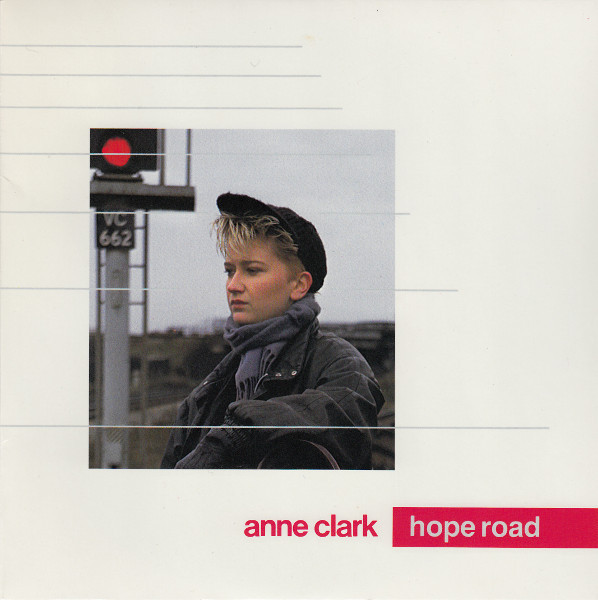
Anne Clark: "Hope Road"


"It pays to be conscientious, pop tarts."
— Ian Cranna

Poor, old Jocky Cranna. He had once been this mysterious Scots chap who reviewed the albums in Smash Hits under the pseudonym Red Starr, confessed to wishing to be kissed by a princess (though not Princess Anne), once switched places with colleague Cliff White just to troll the readers and made it seem like reviewing albums was the only thing that mattered in life. Sure, he didn't go out of his way describe all his misadventures with pop types like Lester Bangs and Nick Kent but that only added to his allure: pop stars who reveal everything about themselves in song are bad enough but music critics using their platform for glorified diary entries?

The shine of writing for a top pop mag may have been taking its toll by the late eighties. Punk and its antecedents were no longer influencing the scene and there weren't those thrilling records of old coming out. The last time he did the singles back in September of '86 and admitted that there wasn't much on offer that gave him much of a thrill — and he's in a not dissimilar mood this fortnight as well. Yet, despite his apathy, he is surprisingly upbeat about the majority of the new singles, with eleven out of fifteen receiving mostly positive reviews and only one (Pepsi & Shirlie's Wham-esque "Goodbye Stranger") being dismissed out of hand.

But Cranna wasn't out to heap praise on a catchy pop hit, he wanted to keep discovering new and wonderful gems just as he used to during the heyday of punk. His unique reviews of Kate Bush's "Running Up That Hill" back in 1985 give off the impression that he was really trying to find something else to topple such an apparently predictable SOTF. Why was he so ennamoured with Die Totenhosen and Freddy Love teaming up for a punk/hip hop crossover? Well, two reasons actually: (a) it was and still is awesome and (b) it was unlike anything else at his disposal. Be good but also be different.

Which brings us to his pick from the current issue of ver Hits. Anne Clark had been around and releasing records over the past four years but it doesn't appear Cranna has encountered her before — and, indeed, he's not alone seeing as how I'd never heard of her until recently myself. Being a spoken word artist and having released previous works independently, it is likely she is the sort of individual that may have cropped up in the NME or the Melody Maker while passing the offices of a teen pop mag by. If Cranna had been previously familiar with her then he gives no indication of such in his write up — and I daresay he wouldn't have been so enthusiastic either.

Cranna knows that "Hope Road" wasn't created in a vacuum. He mentions that it's "sort of Laurie Anderson meets OMD" (though I hear it more as Yazoo's "Only You" meets, well, The Flying Pickets' "Only You"), yet it's so unlike anything else up for consideration that it's no wonder it stands out. I used to have a notion that effective pop music cons us into believing that it's fresh and original even if we know that nothing really is.

Clark's tale of meeting some bloke at a party and following up his invitation to his place for dinner the following week is fascinating, if fairly unlikely. I quite like the fact that she sounds unmoved by this potential romance while still being interested enough to pursue it. As she looks ahead to their meet up, she wonders "what happens if I arrive and there is no Hope Road there?" as though she's expecting to be disappointed. Which makes me wonder: was handing out fake addresses a problem back in the day? I've heard of giving out false telephone numbers but telling someone you live on a street that doesn't exist? Not something I've ever had to deal with. More to the point, what does this rogue fellow have to gain by doing this to poor Anne? Getting a fake phone number is annoying but it doesn't put someone out the way an erroneous street would, especially if they happen to reside in another town.

The performance is so convincing, however, that poking holes in the narrative is something left for afterwards. Clark sings/raps in a downcast way that was very much her style at the time and her matter-of-factness makes it much easier to swallow. "Hope Road" keeps making me think of It's Immaterial's fabulous "Driving Away from Home (Jim's Tune)", a SOTF from a year earlier. The two aren't especially similar barring the spoken word nature, with the glib "Driving" giving a carefree look at getting out and seeing the world; Clark's composition takes the listener away from the outdoors and back into their tiny lives in cold, dank flats.

Cranna imagines that it's a metaphor for "politicians and, erm, the world around us" and I wonder if he's thinking of the general election in the UK that would take place just over a month later. Where does being seduced by a political party lead us, to hope or hopelessness? Would a potential (though ultimately unsuccessful) Labour government really make Britain better off than the status quo? Clark offers no response, only the idea that this should be a "message" to everyone and that is we shouldn't trust others, particularly people we've just met. Again, this is nothing new but the way she states it could only have come from her — and in the end, what else matters?

~~~~~

Also Reviewed This Fortnight

Voice of the Beehive: "Just a City"

Cranna digs the Bees' "Just a City" but is much more impressed with 12" b-side "D'yer Mak'er", a cover of a North American hit for Led Zeppelin in 1973. The original has the benefit of the loudest drums you'll ever hear on a reggae track (no surprises there) and the very un-Jamaican vocals of Robert Plant; this reinterpretation is no more culturally authentic (which is for the best, really) but it's sadly free of the usual winsome Beehive spirit. Good thing "Just a City" is a perfect slice of girl group-influenced indie rock that only Melissa Brooke Belland and Tracey Bryn could dish up. Hit single "Don't Call Me Baby" and should have hit "I Walk the Earth" are superior but this was a welcome sign of things to come. Why weren't they bigger?

Kim Wilde: "Love Blonde"

21 July 1983 "Now that summer's here, I suppose the charts are likely to be groaning under the weight of a load of sticky, syrupy s...