Showing posts with label Mike Soutar. Show all posts

Wednesday, 14 February 2024

Stakka Bo: "Here We Go"


"Breezier than a string vest on Ben Nevis."
— Mike Soutar

"Love Will Tear Us Apart"; "There She Goes"; "Personal Jesus"; "Union City Blue"; "Born of Frustration"; "Girlfriend in a Coma"; "DJ Culture"; "Mysterious Ways"; "Never Turn Your Back on Mother Earth"; "Is She Really Going Out with Him?"; "I Know You Got Soul"; "I'm Coming Out"; "My Definition of a Boombastic Jazz Style"; "Waterfront"; "Glory Box"; "Violently Happy": good to great singles that all somehow stiffed at the unlucky number thirteen spot.

There's no hard and fast rule as to where a single will peak. Great singles have ended up finished well out of the Top 40 while everyone can name a handful of number ones that they consider to be irredeemable. But some inferences can be made from peaking in the upper part of the teens. For indie groups with sizable cult followings such as Depeche Mode, James and The Smiths, thirteen was a pretty standard chart placement. But when it comes to Joy Division, The La's and Dream Warriors it was more a case of bands hitting one out of the park but to only a modest reception. You could say that "Love Will Tear Us Apart" could have and should have performed better but it could just as easily have done a lot worse.

Sweden's Stakka Bo was sort of group/sort of collective/sort of solo project for multi-talented frontman Johan Renck. Nowadays he is best know for directing all five episodes of the HBO miniseries Chernobyl but in the early nineties he was a struggling musician. Had he been British or American Renck would have become a DJ or he would have formed a band. But what am I saying? Most Swedes who aspired to a career in music back then would have either become DJ's or formed bands as well. This Renck fellow was a different sort — and not simply because he looked closer to forty-seven than twenty-seven (though like many who age young, he now looks like a relatively youthful fifty-seven). His incompetence and lack of know-how led to him putting out one of the most remarkable one off pop hits of the decade.

It was in around 1993 that everyone just assumed that everything on techno dance records was sampled, even to a naive listener such as myself. There was a reason every drum sound seemed the same. Plus, why would penny-pinching producers bother hiring sessioners to perform on their work when they could just get someone to pinch from hit records of the past?The flute part on "Here We Go" must have surely been taken from some old Herbie Mann tune from the seventies while those vocals in the chorus ("here we go again" / "get your gear and start to spend...") sound like they came from an obscure eighties club hit by Bobby O or Jellybean. Yet, they were both made in house by colleagues of Mr. Bo.

The tag-teamed raps of Stakka Bo and chum Oscar bring to mind the Stereo MC's and their skeletal frontman Rob Birch but "Here We Go" is otherwise unconnected to, er, "Connected". Musically, it's more reminiscent of the trendy acid jazz of Brand New Heavies and Jamiroquai albeit with less of a blatantly retro sound. Maybe it's just the presence of David Wilczewski's flute but it also vaguely suggests trip hop. Eurobeat aside, it's as if they were plundering all the dominant early nineties' variants of dance music just to put together the best pop record possible. It shouldn't have worked out for them but somehow or other it does.

Not to knock them too much but the other thing Stakka Bo had over the Stereo MC's was their message was much less preachy. Coming from an educated, middle-class Swedish family, Renck's business degree shouldn't lend itself to good pop lyrics but, once again, he proved to be a master of making chicken salad out of chicken shit. Assuming audiences even cared what he had to say in the first place, it's possible to interpret "Here We Go" as either extolling the virtues of a hedonistic, live-for-today lifestyle or as a warning not to get caught up in all this consumption. Other Swedes involved in pop were often prone to composing word salad lyrics but Renck put a surprising amount of care into the words here — even if the message may be rather unclear.

As the intro no doubt gives away, "Here We Go" only managed to get to number thirteen in the UK. We could knock the British for their crappy taste — I mean, what the hell business did bloody Haddaway or a three-year-old reissued and more-useless-than-ever Roxette ballad have finishing above it? — but it performed no better in much of the rest of Europe. Plenty of people clearly liked it just not nearly enough to make it the mega-hit it deserved to be. And we should be careful what we wish for: had it done better, Stakka Bo might have gone on to have further hits and he would have been able to afford to pay others to direct their videos and he wouldn't have gone on to direct promos for The Cardigans and Suede and All Saints and he wouldn't have been behind the series Chernobyl. Plus, "Here We Go" is brilliant enough that it never needed another hit.

~~~~~

Also Reviewed This Fortnight

Culture Beat: "Got to Get It"

Stakka Bo and pals may not have known what they were doing in crafting some fabulous dance-pop but German producer/DJ Torsten Fenslau knew exactly how to come up with catchy and danceable Euro techno for a mass audience. Mike Soutar isn't over fond of breakthrough global smash "Mr. Vain" but he finds himself enjoying follow-up "Got to Get It" almost in spite of himself. I, on the other hand, reckon both records are pretty great. This one doesn't have the hooks of its predecessor but it's probably a little more durable. ("Mr. Vain", for all of its many good qualities, is the sort of thing that is very easy to tire of) Not quite bursting at the seems with pop energy like "Here We Go" but plenty wonderful all the same. Tragically, Fenslau would pass away in a car accident while "Got to Get It" was in the UK Top 10.

Wednesday, 15 June 2022

Kylie Minogue: "Better the Devil You Know"


"Kylie Minogue: She's a fortnight's fun in one! (?)"
— Mike Soutar

On November 8, 1988 the characters of Charlene Mitchell and Scott Robinson were married in an episode of the widely popular Australian soap Neighbours. (Apparently they had already tied the knot some eighteen months earlier back home) To celebrate, the actors that portrayed them released a duet that seemed to blur the lines between their fictional love and real life friendship. "Especially for You" was a monster smash for Kylie Minogue and Jason Donovan, capping a big year for her and ushering in a huge one for him. There had been persistent rumours that they were as much of a couple as their pair they played on TV but the two always denied them. Then another Aussie superstar came forth and made it be clear that he wanted some sweet Kylie action. Minogue was soon seen in the company of Michael Hutchence, lead singer of INXS and major sex symbol. They were no longer together but that was when everyone found out that Kyles 'n' Jase had been a couple all along.

Their music careers had been guided by the team of Stock Aitken Waterman, a trio who could on occasion do tailor made numbers for acts in their stable. As if reacting to the breakup, they gifted Donovan "When You Come Back to Me" in the build up to the 1989 Christmas Number One sweepstakes. It had some festive cheer to it and it was about a young man dealing with heartbreak as he awaits the return of his departed. If Minogue wasn't going to fall for him again then at least thousands of teenage girls were going to. (I get the feeling that SAW was much more invested in this relationship than new exes themselves) For her part, Kylie already had material from second album Enjoy Yourself to be focused on and her breakup song was just going to have to wait.

Pete Waterman has stated that "Better the Devil You Know" is about their view that she should've stayed with Donovan, the safe choice, over Hutchence, the classic rock 'n' roll bad boy. To imagine the squeaky clean Jason as a devil of any kind must have seemed odd but the song suggests that there was a lot more going on behind the scenes than the public suspected. The girl-next-door that they had tended to was gone and it was all the doing of that sex god with the long hair who sang that he needed her tonight and he damn-well meant it.

That is the narrative surrounding "Better the Devil You Know" but it probably only represents part of the story in the eyes of SAW. While Minogue was being led astray by Hutchence, she was also feeling the pull of other writers, producers and genres. Rick Astley and Bananarama had already pulled away from the trio and Donna Summer severed her brief relationship with them when she couldn't be arsed about flying back to Britain to record more material. Though they were still having hits, the days of them having three singles in the Top 10 and four more spread throughout the charts were now over. (By that October, there wouldn't be a single SAW production in the entire Top 75) As if suspecting that their one remaining big star was about to depart, they offered her a not-so-subtle reminder that they were the devil she knew and was comfortable with. Look elsewhere at your own peril, Kyles.

There is a great deal to be said about this record but, sadly, I have trouble getting enthused about the actual song. There's nothing really wrong with it, only that it's just more of the same, especially coming from SAW. True, as Mike Soutar says, Minogue's voice is much stronger than on any of her previous hits. (She also happens to look great in the video which only reaffirms that she's easily the best thing about it) The tune is yet another catchy but forgettable SAW number, a sure a sign as any that their time really was just about up. And don't get me started on those irritating backing vocals, a SAW hallmark they really should have done away with by this point.

Clearly I'm just about alone in giving "Devil" just a shrug of the shoulders — though as the anecdote down below suggests, there were others who were equally indifferent. The single got to number two and it remains one of her most popular early releases. Yet it lacks the ecstatic joy of "I Should Be So Lucky", the careful craftsmanship of "It's No Secret" and the pop breeziness of "Wouldn't Change a Thing". Yet it must be said that it reinvigorated her and SAW's remaining traces of creativity would be concentrated on her records. After playing it safe with this one, she returned later in the year with "Step Back in Time", an absolute stormer in spite of the fact that it undermined SAW's stand against oldies in their appalling '89 hit "I'd Rather Jack" by the Reynolds Girls. Subsequent hits "What Do I Have to Do" and "Shocked" also proved to be stronger than "Devil" and her unbroken run of Top 10 hits continued. Matt Aitken would soon depart leaving SAW as simply 'SW', a pair that was able to get by on fumes from their last year or so with Kylie.

My first encounter with "Better the Devil You Know" happened to be on AM 106, then Calgary's leading teen radio station. Most nights they would do a segment in which two recent singles would battle for the hearts of listeners, who would call in to vote for their favourite. The winner would move on to face another challenger the next night while the loser would quickly vanish off the face of the earth. One night in the autumn of 1990, this latest single from Kylie was in contention against a song I can't even recall. Her star was already in sharp decline since her cover of "The Locomotion" gave her a hit in 1988. (The Enjoy Yourself album had a radically different cover in North America which may have been an attempt on the part of record label Geffen to make her out to be less of a plastic girl-next-door; it was because of this photo that I figured she was going to become a bit of a granola rather than sexKylie) But people just about still remembered her and this latest single was up for consideration on one weekday night in a Canadian city. Needless to say, Kylie got trounced. Doubtless "Devil" had been tested out in various markets in the US and Canada and it wasn't going well. Third album The Rhythm of Love didn't even get released. It would be some time before we'd be hearing from her again on this side of the Atlantic.

~~~~~

Also Reviewed This Fortnight

The Beloved: "Time After Time"

British indie's explosion in 1990 encompassed a lot of styles. Obviously Madchester set the pace but there was also post-Smiths gloom rock, jangle pop and early shoegaze about. And then there was The Beloved, a post-punk band who underwent a sonic makeover at the end of the eighties — and then spent the bulk of their brief chart lifespan bouncing from genre to genre. I honestly never knew they had synth-pop in them but here it is, their very own attempt to compete with Depeche Mode, New Order and Pet Shop Boys (yeah, that didn't work out so well, did it?). The group's eclecticism made them interesting but it probably resulted in them struggling to cultivate a loyal fanbase at the same time. "Time After Time" strives for something but you can't help but feel that they missed the boat. Oh well, I'm sure they were able to hop on another vessel promptly.

Wednesday, 16 February 2022

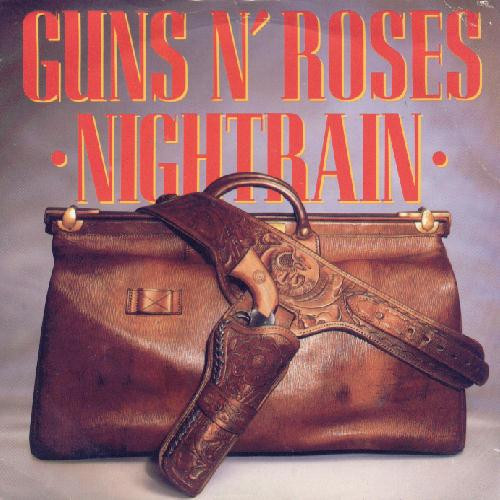
Guns N' Roses: "Nightrain"


"Makes other rock bands look crap."
— Mike Soutar

I hadn't been gone a month and it was as if I'd never been there. I left the UK on August 4th and immediately went back to the life I'd left behind. The same friends I had nothing in common with (and even less so now), the same summertime routine of sleeping in, swimming lessons and slurpees, the same aimlessness that would fester for a good many years. It would be some time before the experience of living in Britain would sink in. As for the old world itself, it never knew I was there. This issue of Smash Hits bears little in common with the pop scene that I had just left behind. Groups were coming, groups were going, groups were returning, groups were pretending.

As everyone says, pop stardom is fleeting. The fame window only remains open for so long. In this issue's singles review, Mike Soutar examines a handful of acts who were just about done with their rides on the giddy carousel of pop. Johnny Hates Jazz had spent 1987 and the early part of '88 enjoying a string of hit singles and a big fat smash album before vocalist Clark Datchler decided he'd had enough. Now, they were back (BACK!!) with Phil Thornally doing the singing (I think he once had a cup of coffee in The Cure and would eventually write "Torn", the global hit for Natalie Imgruglia in 1998) but they were soon to discover that they weren't about to strike gold a second time. Soutar predicts it's either sink or swim for the latest Danny Wilson single (it's the former) and they would promptly vanish. The London Boys had had a pair of big hits but their momentum was about to disappear with third attempt "Harlem Nights Desire". As for The Jacksons, what in god's name were they still doing around in 1989 anyway?

Even some of the bigger names here were soon to fall off somewhat. Gloria Estefan's Cuts Both Ways was her best album yet but her music would never be the same following the terrible bus crash at the start of 1990. All this Batman nonsense wasn't doing Prince any favours and it would be some time before he got back on track. Madonna was peaking but she too was entering a rather fallow period that wouldn't be set right until close to the end of the nineties. Bobby Brown (see below) promised a future that never came — unless, of course, you happened to be anticipating a future of creative bankruptcy, violence and a craft service table of choice narcotics.

Boozing, dirt-bag hard rockers may have had it right all along. Their philosophy (to the extent that any of them had one) seemed to be get rich, party hard and make the most of every second until it all dries up. Even if they'd end up leaving a trail of rock 'n' roll casualties, the vast majority of them wouldn't have changed a thing if they could live it all over again. And no group seemed to live larger than Guns N' Roses.

Metal groups tend to take a while to catch on. Def Leppard toured all over the place and had two albums that sold respectably — in spite of their very un-metal titles — before they really started to take off with the 1983 album Pyromania — whose title is very metal. Similarly, Bon Jovi did a pair of LPs that hardly anyone bought before releasing breakthrough Slippery When Wet. GNR, however, were different. I always assumed they had some self-titled debut put out in 1985 that nearly got them released from their record label but there is no such album. In fact, Appetite for Destruction appeared to be a potential metal obscurity in its first year before mainstream audiences joined headbangers in purchasing it en masse.

The album came out in 1987 but it wouldn't start to sell until '88. It is, therefore, appropriate that their proper boom in Britain would be delayed until '89. "Sweet Child o' Mine" and "Welcome to the Jungle" were minor Top 30 hits in the second half of 1988 but these were strictly being picked up by metalheads; the pop kids were just going to have to wait. Somehow or other, "Paradise City" was where they began to emerge in the UK. Its Top 10 success was then followed by a remix of "Sweet Child o' Mine" (with Slash's edited guitar solos making it preferable to the original in my opinion) and "Patience", taken from mini album G N' R Lies. The tunefulness of the former and the acoustic mournfulness of the latter was all well and good but what about the Guns N' Roses that drank and debauched themselves into a rock cliche?

"Nightrain" had already appeared as a double A-side with "Welcome to the Jungle" a year earlier. As was customary with the format (barring the odd "Strawberry Fields Forever"/"Penny Lane"), only one song got what little airplay there was to be had and it wasn't "Nightrain". The good news of being spurned the first time was that it still had legs as a single in its own right. Still, just because a record can be released doesn't mean it needed to be.

There's nothing especially wrong with "Nightrain" but it doesn't exactly scream potential hit. While as vigorous as any song with lyrics about being "loaded like a freight train" and "flyin' like an aeroplane" and "feelin' like a space brain" ought to be, it isn't particularly catchy the way earlier hits managed to be so effortlessly. Instead of being that tacked on single that no one needed, it would have been better off being that deep cut that fans reckon really ought to have been a single. It didn't do them any harm and performed better than it deserved (a signal of how big they had become was that a former double A-side and cut from Appetite for Destruction still had legs to get into the Top 20) but no one paying attention to the charts became Guns N' Roses fans because of it. Their fanbase was big enough by this time to guarantee some chart action especially since it's crammed with Axl Rose screaming and loads of high-octane guitar riffage. What more could people want?

Thankfully, they refrained from putting out more material from their first album. The group was beginning to stockpile fresh songs (in an earlier issue of Smash Hits, Rose admits to having a song called "November Rain" that he's determined to put out or else he'll "quit the business") that would result in the highly-anticipated twin release of Use Your Illusion I and Use Your Illusion II, albums that were almost as big as Appetite for Destruction and which would spawn a string of Top 10 hits. Their inevitable self-destruction would be delayed until afterwards. Not that they have any regrets or anything.

~~~~~

Also Reviewed This Fortnight

Bobby Brown: "Rock Wit'cha"

It never occured to anyone at the time but Bobby Brown and Guns N' Roses were living parallel lives. Both released albums that took a while to get going (especially in Britain) and both were in the midst of their imperial periods when they released these rather substandard singles. Brown's run of hits was surprisingly diverse (the new jack swing of "My Prerogative", the cool R&B of "Don't Be Cruel", the whimsical "Every Little Step") so it stands to reason that a quiet storm number would be on deck. Anticipating Boyz II Men, it's the sort of thing that I've never warmed to in the hands of male vocalists. (Anita Baker, for one, did it way better) The British weren't convinced either as "Rock Wit'cha" only managed to limp into the Top 40. Brown's notoriety was enough to keep him a hit parade regular in the early-nineties but a GNR-esque collapse was coming. Those imperial periods come with a heavy price.

Thursday, 13 January 2022

London Boys: "London Nights"


"Neither Spagna nor Milli Vanilli can hold a candle against this."
— Mike Soutar

There aren't many left but if you ever happen to browse around a South Korean record store there's a decent chance you'll come upon a copy of The Twelve Commandments of Dance by London Boys. I began noticing this a few years ago and wondered why music shops were choosing to stock this album when it was clear that no one wanted. Then, I happened to be speaking to a couple I know well about music. They both liked Michael Jackson, vaguely remembered Madonna and hadn't heard of either George Michael or Prince. Then, the woman mentioned that she really liked the London Boys and her husband concurred. Based on this admittedly slim bit of polling, I can conclude that there had once been a demand for their work even if there no longer was any. But such is the way of popular music.

When The Beatles left Liverpool for Hamburg they were unknown by most and disliked by the rest. Howie Casey, sax player for Merseyside group Derry and the Seniors, begged Alan Williams not to send that "bum group" over to Germany, fearing that they were going to ruin it for everyone. Nothing of the sort happened and the Fab Four returned to England a markedly better band, one that was a step closer to world conquest. John Lennon recalled that everyone thought they were German and that they "[spoke] good English".

Confusing Die Beatles for Germans wouldn't last long (especially after they made such a hash of both "Sie leibt dich" and "Komm, gib mir deine Hand") but there's no question that their time in Hamburg did them a world of good. Over the years, Germany became a place where pop stars of different stripes and various levels of success could go to turn their fortunes around or just get themselves together. Donna Summer spent most of her twenties in Munich where she would first meet fellow transplants Giorgio Moroder and Pete Bellotte; she wouldn't move back to her native United States until after becoming a global superstar. David Bowie and Iggy Pop famously lived in West Berlin in the late-seventies which resulted in a creative flowering for both of them. The influence of American and British artists on German pop was such that English became the lingua franca of domestic acts from Boney M. to Propaganda.

So, a trajectory of The Beatles to Donna Summer to David Bowie and Iggy Pop to...the London Boys. (One of them is not like the others) Edem Ephraim and Dennis Fuller were German residents but they had originally been from, well, London. Being based in Hamburg, a name like 'London Boys' must have carried more weight than it would have back in their homeland (they were so-named because "everyone in Germany called us two boys from London"). Indeed, a group called Londonbeat had recently been on the charts with the single "9 A.M. (The Comfort Zone)" and it had been obvious that the group's three American vocalists and guitarist who everyone assumed to be German (turns out he was in fact from the UK) had next to nothing to do with the British capital. Bands from London didn't need to advertise where they hailed from; only those who came from elsewhere felt the need to tell everyone about it — something that Dennis and Edem doubled down on by titling their second hit single "London Nights".

When London Boys emerged in the spring of 1989 it was with "Requiem", an over-the-top dancefloor stormer that gave them a Top 5 hit. Its chart progress had been slow with the single drifting around the lower reaches of the flop side of the hit parade in December and January before returning in the spring when it would eventually peak. The momentum it generated was strong enough that its follow-up came in with a bang, being that week's second highest new entry (behind a still widely popular if increasingly stale Queen). "Requiem had only just dropped off the Top 40 a week earlier which would give London Boys an impressive nineteen straight weeks of chart action spread over a pair of singles.

But if we had assumed that Dennis and Edem's second hit was just going to be more of the same from the first, we were mistaken. Sure, "London Nights" is good fun with plenty of Euro-stomp energy but it's streets ahead of "Requiem". I had dug their first hit but found the pleading chorus ("this is the story now, the story of our love") utterly unconvincing. The duo drew upon religious imagery from time to time but in a very artificial fashion (even as a unaware twelve-year-old I knew that The Twelve Commandments of Dance was a lame title).

By contrast, "London Nights" felt the real thing. Being expats, they had memories of London to rely on but it feels like they'd been away for long enough that that they were able to pull off romanticizing it. With West Germany thriving, they weren't necessarily privy to the worst of the Thatcher years. There's a certain darkness in the verses but it's counteracted by an ecstatic chorus. Showing that they'd picked up more than a little from their adopted country, it's not unlike Propaganda's wonderful singles "Dr. Mabuse" and "Duel". On the other hand, it also draws upon Pet Shop Boys, who had already immortalized London as a hotbed of sleaze in "West End Girls".

London Boys had hits in Britain and throughout Europe (and, presumably, South Korea) but where they remained unknowns was in North America. While Milli Vanilli ran off a succession of Top 5 hits, Dennis and Edem remained an obscurity, something I could never comprehend. Their records were unavailable to me but the bulk of "London Nights" had permanently squatted in my brain. It became one of those songs I most associated with the end of my year in England and one that would lead me to over-romanticize this period of my life. I had enjoyed our many visits to London but it had never been a place I experienced at two or three in the morning when "the party's out and the fever [drove me] wild" but that's the kind of London I created in my mind. Again, such is the power of pop.
 
~~~~~

Also Reviewed This Fortnight

Prince: "Batdance"

Half-Prince, half-Joker, the Purple Perv manages to look like Two-Face in the video of "Batdance". Even more confused is the record itself. It seemed cool at the time until the soundtrack came out when it was revealed that it was just a glorified megamix of the album and, indeed, a condescended six-minute summing up of the Batman film that was on its way. A mess and, as Mike Soutar says, "very odd indeed" but a just-past-peak Prince managed to tie it all up into a great party record to rival "London Nights".  Obviously he accomplished far more elsewhere but you'd be hard pressed to find another record of his that is this much fun. And I still quote "This town needs an enema!" on occasion without even thinking of Jack Nicholson or Tim Burton: as far as I'm concerned, this was all Prince's doing too. Shame I bought that soundtrack album though.

Wednesday, 4 August 2021

Brother Beyond: "The Harder I Try"


"A more apt title for a single there has not been since "When Will I Be Famous", since no other band has ever tried harder to snatch a whiff of success than the 'Yond."
— Mike Soutar

Needless to say, the majority of pop groups don't make it. Most aren't even close. Lowest on the totem pole is your typical hopeless high school band, a foursome who play just the once at an end of the school year assembly and then fold up shop due to creative differences (i.e. the girls didn't throw themselves at them following that first "gig"). Then, you've got your respectable workaday band that plays around their hometown, develops a bit of a following but aren't able to cut it any further. It's still a bit of a climb before record labels begin to pay attention and, even then, there's still no guarantee of the pop charts.

This blog has seen some less-than-household names. Many were still feeding off the D.I.Y. energy of punk, were on tiny labels and didn't stand much chance of a hit single. As the eighties progressed, however, the big record companies began to reassert their dominance and they put considerable funds behind their signings. Some paid off but lots of others didn't.

The way out for many groups was to have a hit elsewhere, especially those lucky enough to do so in the US. Breathe couldn't snag themselves a Top 40 placing back home to save their lives but as soon as their, well, breathy ballad "Hands to Heaven" got released on the other side of the Atlantic, it flew up the Hot 100. The British, for their part, acted suitably and  the single became a belated hit. The same thing happened with Chris Rea, Dire Straits, Danny Wilson and Waterfront, of all people. Yet, it would often prove a band-aid situation: American success might remain but the hits back home would quickly dry up, as Breathe themselves experienced.

Brother Beyond didn't have the luxury of foreign charts, even though they initially did well in Italy, where they were known as 'Brother Behind'. Four flops came and went and the promising young group looked finished. Their early work isn't bad though and it isn't difficult to imagine them all cracking the charts had their luck been going for them. (This is even brought up in two different singles reviews with both Barry McIlheney and Ro Newton suggesting that Nathan Moore putting a hat on backwards — just like Ben from Curiosity Killed the Cat — was all that was stopping them from hitting it big) To their credit, however, they didn't have that easy answer ballad in their back pockets to give them that elusive hit.

Then came Stock Aitken Waterman to the rescue. To help raise funds for the Young Variety Club of Great Britain, SAW auctioned off their services. Record label EMI made the highest bid and one of their struggling acts would be gifted with a composition and studio time. Brother Beyond were selected and their fortunes would soon change.

SAW referred to themselves as a 'Hit Factory' but this label wasn't yet accurate. Assembly line writing and production for cookie cutter acts only really began as their work diminished in quality over the course of 1989 with the abominable trio of The Reynolds Girls, Sonia and Big Fun. Rewind back a year and they were still craftsmen, piecing together songs and sounds with various acts in mind. Bananarama had been around a bit and came across as kindly older sisters giving advice to younger siblings. Mel & Kim were a pair of tough sisters from hardscrabble east London who'd been through a lot. Rick Astley was a sensitive lad who tried to do what was right for his sweetheart. Kylie was the ultimate girl next door. SAW's best stuff for each of these acts reflects these roles.

Brother Beyond were not a part of the SAW sphere for long enough to get themselves boxed into playing a part but I'd argue that some thought had been put into what they shouldn't be like. Bros had begun dominating the charts in 1988 with hits such as "When Will I Be Famous?" and "I Owe You Nothing" and what set them apart was a sort of angry confidence. While there had been traces of humour in their first hit, subsequent singles were deadly serious affairs and they would prove to be no different in real life interviews (but more on that in a few weeks). The 'Yond weren't exactly shy themselves — Moore smiling, chiseled features made him an instant pinup but "The Harder I Try" displays a newfound vulnerability that contrasted nicely with the Goss twins and the other one. Matt Goss wasn't about to put up with any of your nonsense, girls; Nathan Moore, by contrast, will not stop hoping.

With a Northern Soul/Motown feel, "The Harder I Try" may have seemed like a throwback but it was a fresh sound compared to much of the British blue eyed soul that had been all over the charts for the past two years. Matt Stock and Mike Aitken have admitted to giving "Never Gonna Give You Up" an old-fashioned pop sound but they perfected the art here. It's a little more casual that what Brother Beyond had done before but still very much in keeping with what they were interested in doing. As Mike Soutar notes, it's recognisable SAW but not drowning in their cliches. Sure, it opens with their patented bit-of-the-chorus-in-instrumental-form and has those cooing female backing singers that they used to death but, otherwise, it isn't the most SAW thing around at the time.

The 'Yong are now described as a 'boy band' (notably, a term no one used back then) and it was likely their Top 10 hits with SAW compositions and connection to Bros that earned them this label. This is something I hope to go into in greater detail in an upcoming entry but I will say that it may be possible that their breakthrough smash became their undoing. The songs that band members Carl Fysh and brothers David and Eg White had written didn't go anywhere but they were suddenly big with a track created by the biggest songwriting/production team in the land; how they would fare without that safety net is a whole other matter.

~~~~~

Also of some cop

Fairground Attraction: "Find My Love"

Soutar reckons this follow up to the number one hit "Perfect" is "rather basic" but I beg to differ. He only really hears guitar and bass but there's also an accordion in there too and it's a nice touch. And there's even a mandolin! Instrumentation aside, "Find My Love" is superior to its better known predecessor. I always associate it with visiting a windswept seaside town on the coast of Ireland during February half-term break. There's a photo that my dad took of the rest of us (my mum, sister and myself, as well as my aunt and cousin who were visiting from Canada) and you can see I have my headphones on. I'm listening to "Find My Love" and it's a perfect mix of location and song. Yes, it's much more typical of Fairground Attraction but that's no bad thing. Fortunately, it managed to give them another Top 10 hit but Soutar ultimately isn't wrong when it comes to the pop ride coming to an end, as we'll see soon.

Kim Wilde: "Love Blonde"

21 July 1983 "Now that summer's here, I suppose the charts are likely to be groaning under the weight of a load of sticky, syrupy s...