Wednesday, 8 January 2020

Memphis: "You Supply the Roses" / Art of Noise: "Moments in Love"


"It makes me really happy — I wish the charts were full of songs like this."
— Rose McDowall

"It makes my eyeballs feel floaty."
— Jill Bryson

"It makes me feel like ice skating in the cold night air while listening to it on my Walkman."
— Rose McDowall

A Radio One DJ, a twelve-year-old with very strong opinions and a pair of Scots goth-bag ladies: it's been a while since an actual Smash Hits staffer had to sift through the singles, hasn't it? But no matter, they're not going the Number One route of only featuring mindless guests in the critics' chair, these are all people with something to say and not simply looking to advance their careers in such a modest fashion. It makes me think there's a pop music critic in all of us.

As one hit wonders go (a term, incidentally, that I despise; not only does the classification depend on the country — Madness being far from a one and doner in the UK despite being exactly that in the US and Canada — but it's snarky and mean-spirited and conveniently leaves out the fact that one solitary hit single is still far better than none) Strawberry Switchblade are fondly remembered. Their sole smash "Since Yesterday" has oak-aged which certainly helps but their image also left an imprint on people. No one looked like them. No one would ever have thought to look like them. Not conventionally beautiful but there's something about them. They make me feel like I'm back in junior high school and I have a crush on that weird girl which I'm determined not to share with anyone under any circumstances.

First up is Rose McDowall's pick of "You Supply the Roses" by fellow Scots Memphis. Formed by disillusioned members of Orange Juice James Kirk and Steven Daly, it is a bright and sunny bit of indie pop — with "twinges of country" as she points out — that the Blades are already familiar with. Either confusing it with an old country standard by the likes of George Jones (so baked it is in old school Nashville values, I can easily see a version of it popping up on Elvis Costello's Almost Blue) or already a firm favourite in Gorbals-area clubs, it isn't quite up to Jill Bryson's standards even though she too is pretty impressed. I like it but not as much as I'd like to like it. It makes me think of how I like turkey and I like cranberry sauce but I don't really care for them together.

Bryson opts for "Moments in Love" by Art of Noise. Impressionistic and warm, it's ruined by the lack of a tune to grab hold of. I would very much like to appreciate the charms of Anne Dudley, Trevor Horn and Paul Morely but it smacks of a work that is interesting rather than gripping. A fine enough listen but one which is forgettable as soon as its finished. (Did Bryson make her selection while it was still playing?) It makes me feel like I have something to say and I'm itching to say it but the words stubbornly refuse to come out.


~~~~~

Also Reviewed With Feeling This Fortnight

Cocteau Twins: Aikea-Guinea

Jill and Rose are feeling all sorts of things with this Cocteau Twins 12" EP. Here is an exchange of them trying to outdo one another:

J: It's all very atmospheric — in fact, it makes my skin ripple.

R: Well, it makes my organs wobble.


J: And it makes my eyeballs flip.


R: And it made my record player jump.


(The seeds of their eventual falling out, perhaps)

Some typically gorgeous industrial loveliness from yet more Scots. It makes me feel like a tulip growing out of a crack in the concrete outside of a smoke-spewing factory.

Wednesday, 1 January 2020

Nik Kershaw: "Wide Boy"


"What he's trying to say is that his critics think he's stupid but, because he's got so much success, it doesn't bother him."
— Marshall O'Leary

Paul is a Chickadee reader (aged 7) who lives in the neighbourhood of Beddington in the north part of Calgary. He wavers between Twisted Sister's "We're Not Gonna Take It" and New Edition's "Mr. Telephone Man" as his favourite song of all time. He doesn't have much to say about pop music as you can see below.

I'm sorry, I don't know who he is. Why doesn't he spell his name with a 'c'? It looks dumb spelled 'n-i-k'.

I asked some people around me what they thought of this song. Here's what they said:

My sister Julie liked it but she stopped caring when I told her who it was. She only likes Culture Club. Did you know that she was Boy George for Halloween? And that she was Boy George in her class air band show? Everybody looked at Julie because she was Boy George. No one knew who Sting was and no one knew who Phil Collins was and all those other people in Band Aid. I was proud of her.

Mummy only likes Paul Young now. She asked me to turn this down right away.

Daddy said "no thanks". He was watching a hockey game and didn't want to be disturbed.

My friend Kevin said it's not as good as Howard Jones who he likes a lot but I don't like Howard Jones because of his stupid hair and dumb songs. Maybe I should like Nik Kershaw if Kevin dislikes him.

Craig down the street never gave me back the Archie comic he borrowed so I didn't want to give him a copy. I asked him to come over to hear it but he wants to play street hockey at the Green instead. I want to play too so I should finish this soon.

Ethan at school was too busy sucking on cigarette butts from a flower bed in front of Highwood and didn't want to hear it. I think he hates music and he will probably be a lawyer or a doctor or something when he grows up.

Karim kind of likes it. He wasn't humming it at the bus stop or anything but he got his daddy to buy him the Nik Kershaw tape. Karim said he'd lend it to me and I gave him back his Return of the Jedi book so he won't mind lending it to me.

Paul B likes it a lot but then he bit me on the arm when I asked him why he likes it. Why am I still friends with him?

Do you want to know what I think? Well, it's okay. I think that Marshall is wrong about the meaning of "Wide Boy". I think it's about fat guys thinking they're really important. Grandpa Roy is fat and he thinks he's important. He sells houses. He doesn't care if people think he's fat. People laugh at fat guys but I think they don't care and they feel more important for being fat. I wonder if Nik Kershaw doesn't like fat guys. Ethan said that he doesn't like fat people but I can't say that because Grandpa Roy is fat and so is Louise who is friends with Mummy and Daddy. I think fat people are fine. And the song is nice but maybe he should be nicer to fat people. (By the way, hello to: Michael B, Michelle and Angie, Wesant and Mike from swimming lessons)

~~~~~

Also Reviewed This Fortnight

Billy Bragg: Between the Wars

Daddy likes this kind of thing. He says that folk music tells a story but I think that Twisted Sister tells a story in they're song but he says they aren't folk so I don't know what he means. Marshall doesn't like Billy Bragg's voice but I think it's neat. People in England talk like him but they don't usually sing like him. He says he was a minor and a dockor and a railwayman between the wars. I didn't know that people have more than one job when they grow up. Daddy is just a teacher, he doesn't have other jobs. I don't know when these wars were. Grandpa Bill was in the Second World War. He told me that Hitler heard his foot steps and that's how the war ended.

Wednesday, 25 December 2019

The Jesus & Mary Chain: "Never Understand"


"Its simplicity and individuality amid countless, cowardly records in the review pile striving to sound like each other is nothing short of exhilarating. Good vibrations."
— Andy Kershaw

The class of '85 is so far a trip through the British indie scene (although that will soon change). If The Associates weren't quite the same as the others, they were at least adjacent to what was going on in the periphery and their journey down the dumper in the aftermath of Alan Rankine's departure ensured they were down to a loyal but diminished following of people with possible interests in The Cure, The Smiths, Bauhaus, Depeche Mode and Siousxie & The Banshees — Duran Duran and Spandau Ballet fans probably weren't listening anymore. Frank Chickens were as much performance artists as musicians and they, too, had a small following that was never going to grow enough to get them near the charts. Julian Cope had, like The Associates, enjoyed hit singles but his muse had become far too out there for him to get anything more than the odd token top forty appearance.

With all due respect to these three acts, none were of much importance to UK indie. (I type this feeling like if I had any readers they'd complain that I'm ignoring Cope's influence but (a) I'm not overly convinced he had much of an effect and (b) he was way too much of a one-off to be taken as a capable alternative figure; his erratic talent could have meant millions of fans or a smattering of loyalists in Monmouthshire but either scenario doesn't make him any more indie than pop - in the end he's just Julian Cope, an alternative to absolutely everyone else) Few major figures materialise; just as it's rare to come across a pop act that bursts forth to sustained success and a positive effect on other groups, indie acts that really matter are difficult to come by.

The Jesus & Mary Chain don't seem quite as radical as they must have been back in the mid-eighties — and much of that is down to their massive influence over British and American indie. While hard rock, metal and punk had all been accompanied by vocalists screaming, shouting and sneering, few had ever heard (or not heard as the case may be) someone like Jim Reid casually mumbling and whispering his way through a track such as "Never Understand", as if demanding that his audience really listen to him through noise. Fans unwilling or unable to do so were still able to enjoy William Reid's crunching, slithering guitar parts thereby bringing together indie types with interests in angsty lyrics and chaotic feedback into following one act.

For all of that, a figure as musically knowledgeable as Andy Kershaw (of The Old Grey Whistle Test) is able to see through the racket and detect a "breezy melody curiously reminiscent of The Beach Boys". Those of us who are as well versed in Pet Sounds as they are in Psychocandy (if not more so) can see this too but I imagine the average Chainer wouldn't have be aware of it had William Reid dressed up like Mike Love and Bobby Gillespie gone a little less down the dirt bag path to model himself after Dennis Wilson. But the influence doesn't stop "Never Understand" from being as unique as virtually everything else on offer is typical.

But from the vantage point of nearly thirty-five years, it's a record that sounds like much of what would come later. Only much better. Not everyone can whisper over screaming guitar feedback and make it work no matter how hard they might have tried.

~~~~~

Also Reviewed This Fortnight

"Starvation" / "Tam tam pour l'Ethiopie"

A self-titled split single released as a reggae/African music answer to "Do They Know It's Christmas?", "Starvation" / "Tam tam pour l'Ethiopie" are good enough songs not to even require a good cause which makes its low chart placing even more shameful. The UB40/Madness led "Starvation" is the more commercial with a great singalong chorus but "Tam tam pour l'Ethiopie" gets better with repeated hearings. The white guilt of Band Aid has never bothered me as much as many but something done from the perspective of the millions of poor victims of the Ethiopian famine is much more potent than cries of "thank god it's them instead of you". Just give it a try.

Wednesday, 18 December 2019

Julian Cope: "Sunspots"


"This is a stern, strident and invigorating march through some lunatic wasteland where tinny guitars slash, people whistle out of tune and someone pipes up on a jaunty recorder during the most compulsive sway-along chorus since long before Foreigner."
— Tom Hibbert

Nothing beats a reference to Foreigner to make you well disposed to a rival record. "Well, this really isn't my sort of thing but I don't hate it and it's not bloody Foreigner so it's okay by me!" "I'm not especially into much pop music beyond the mid-nineties but at least I've existed in a musical landscape for over a quarter-of-a-century without Foreigner." "The latest Maroon 5 record? We'll it's balls but not compared to..." Okay, I over-reached myself.

Oh well, is it too much of a backhanded compliment to say that I don't have a whole lot of interest in listening to the bulk of Cope's work but I'm still happy to see him around? Someone's gotta put out "lunatic wasteland" records and he's plenty lunatic for it. Like heroes Syd Barrett, Roky Eriksson and Skip Spence, there must be some sort of genius lurking in there and we can but hope that it will peak through in time. These casualties of sixties drug culture were always given the benefit of the doubt but seldom did their talents emerge. On the other hand, Cope is alive and well and still active and his main skill might be in being Julian Cope. But does he craft excellent pop records?

We're a few years out now from Cope's commercial golden year when his act The Teardrop Explodes exploded on the scene and the hits — both of them — came forth and he's clearly not especially interested in replicating their former success. (Either that or going round wearing a tortoise shell happened to be his best idea for how to market himself and give the punters what they want) Still, his solo career has been much more accessible than one might think and "Sunspots" is a prime example. Well constructed and with hooks and plenty of that swaying that Tom Hibbert is evidently so fond of, it's a fine listen but one that fails to invite replays and doesn't manage to get stuck in the mind. It's easy to picture young people listening to John Peel or Janice Long and really digging Cope's latest record — not even necessarily this one — but forgetting all about it once the latest Smiths, Cure or New Order single got played immediately after it.

Being both highly individual and prolific, Cope was slowly building up a loyal following so it's not as if everyone felt this way about "Sunspots", even if they couldn't get it any higher than number seventy-six. Less produced than Teardrop Explodes material, one might feel captivated by the singer's commanding vocal and how well the tinny guitars, out-of-tune whistling and jaunty recorder all mesh. I'm not convinced he won a lot of new fans but I can't imagine many Cope cultists were beginning to push away either. Pretty bloomin' great if you like this sort of thing and perfectly acceptable if you're a neutral.

Julian Cope has always been a figure to admire: he has a unique voice and presence, he's always done things his way and he doesn't care what you or I think of him. All that's great but it's worth pointing out that we may feel just as apathetic towards his work as he does towards our opinions of him. Plus, too much admiration can overwhelm our perceptions of an artist: I hold Prince as an individual in high esteem and sometimes these feelings manipulate myself into believing that I also like his music. Same goes for Cope: I don't mind when I hear his stuff but I never feel that I need to. And he's way better than Foreigner.

~~~~~

Also Reviewed This Fortnight

The Nirvana Devils: "Some Foreign Shore"

His nibs oversells things a bit here by calling it the greatest German record of all time. No, it's nowhere near Kraftwerk's "Trans-Europe Express" or Can's "Spoon" or even Culture Beat's "Mr. Vain" — though Hibs wasn't to be aware of it for another eight years, assuming he ever was — but that doesn't mean it isn't worth seeking out. Stellar, speed-infused garage rock that threatens to turn into a psychedelic Nuggets masterpiece, it maintains a furious pace and, again, I can certainly understand why our madcap reviewer is so captivated. Like Cope's SOTF, however, it's like that Milan Kundera novel you read that you're pretty sure you liked but which didn't stay with you in any way. Enjoy music in the moment then move on.

Wednesday, 11 December 2019

Frank Chickens: "We Are Ninja (Not Geisha)"


"Utterly silly."
— Chris Heath

As Smash Hits continued to plow through the eighties, it gradually began to become more and more similar to the magazine that captured my imagination at the end of the decade. Making a gradual transition from black and white to glossy at around this time, the reviews were still very much a throwback, with only a trace amount of colour separating it from the serious inkies. Beyond aesthetics, the writing staff was showing some turnover. 1985 would be the year that Neil Tennant would depart to have a go at making his own pop records while editor Mark Ellen was nearing the end of his time as well (he would help launch Q the following year) and Dave Rimmer, preoccupied with work on his outstanding account of eighties pop Like Punk Never Happened and a move to Germany, began working on a freelance basis. It was, thus, time for some new blood: writers who grew up as fans of the magazine who would then be on staff at its zenith.

Chris Heath would go on to be the first Smash Hits writer to really make an impression on me. He seemed to love music of all kinds, didn't blush from declaring certain records to be utter crap and never gave off noxious vibes that he was a failed musician determined to use his platform to rip into anything beneath him. The very first time I read one of his reviews he tore into my favourite record of the time (something we're sure to get to in a few years) but I wasn't crushed by it. He had his reasons and they were in good faith and for the first time in my life I discovered you could read a negative review and not wish to tear up said top pop mag into a million tiny little pieces. (It was a lesson that I didn't end up paying attention to at the time but it's back with me now!) Heath was also the first Hits scribe to write a book that I would go on to read: I've gone through several since and I've enjoyed them all but none have come close to his.

This is just the second entry from the class of '85 and I'm still reeling from the sorry state of the Singles of the Fortnight from the previous year. I had always held 1984 in esteem growing up since this was when I started to become aware of current pop music but now I can only wonder if all those criticisms of the decade that I used to scoff at aren't somewhat true. And it wasn't simply a case of some poor choices for SOTF either: in many instances reviewers were right for choosing a so-so record over some pretty blase competition. As a boy 1984 seemed exciting: everyone dressed up, looked weird and didn't care what you thought. A pity the music wasn't up to much and that even extends to the highest of levels.

So, a new year and a fresh start, right? Well, sort of. "We Are Ninja (Not Geisha)" is a stupidly great record that beats virtually everything from the previous year. The problem? It comes from 1984 as well. Already reviewed eleven months earlier by an equally enthused Rimmer, it was only denied SOTF status by a peak-of-powers Scritti Politti. Unfortunately, a bizarre Japanese single on a tiny record label that wasn't going to be picked up by anyone other than John Peel didn't stand much of a chance in a year of crap pop and didn't do much better upon reissue here. Still, it seems to have delighted everyone who spun it, reviewed it and, I assume, decided to roll the dice with a purchase.

What did/do we all see in it? Well, it is indeed utterly silly and that's precisely what makes it so wonderful. The duo of Kazuko Hokhi and Kazumi Taguchi, along with producers Steve Beresford and David Toop, seem to have randomly thrown together disparate elements such as traditional Japanese music, avant-garde noise and synth-pop with some rapping and singing and chanting over top and the results are pure magic. Catchy as all hell and impossible to tire of, it could light up a discotheque or soundtrack a night in with some jazz cigarettes. Who knows or cares what all this nonsense means — and I suspect that it might puzzle a lot of Japanese speakers too — but I imagine they're making a commentary on western perspectives of Asian women. They're not here to serve you or please you with some rumpo but to attack you with some craziness. If we're going to use a lazy stereotype to describe them then why not use something better than 'geisha'? Good on them. Is it too far out for some? I suppose so but that's their problem. They can have all that boring crap from '84.

~~~~~

Also Reviewed This Fortnight

Red Box: "Saskatchewan"

I am well aware of the fact that the majority of Britons know next to nothing about Canada - it was the very first thing I learned about it when I lived there in fact. Thus, I won't quibble with Heath wondering why the members of Red Box are "singing about a Canadian town" when Saskatchewan is in fact a province (and, actually, he may not even be wrong since the lyrics go on about "Qu'Appelle Valley, Saskatchewan" which is sort of a town). Written by Buffy Sainte-Marie about the place of her birth, the original is reverential but so, too, is Red Box's interpretation. Quite whether Simon Toulson-Clarke and co. ever bothered going to the Canadian Prairie Provinces is something to ask them but his interest in native affairs is genuine and the record is heartfelt. Not the hit that Heath hopes for but they'd soon be in the top ten with another single borrowing liberally from the natives. I hope they sent a cheque to the good people of Qu'Appelle Valley, Saskatchewan.

Wednesday, 4 December 2019

The Associates: "Breakfast"


"Melodrama at its best, this is the kind of thing to listen to on a brittle white winter morning, while feeling love-lorn and poetic."
— Vici MacDonald

We last encountered The Associates on here just as they happened to be on the ascent. They really did have it all: a frontman with a kind of melancholic charisma partnered with an able guitarist who in tandem pieced together a single that is so catchy and so addictive that when the good people at Ace Records finally get round to inviting me to curate a Singles of the Fortnight compilation it will be on my shortlist. Fleshed out with a strong cast of backing musicians — who weren't quite full time Associates (though you'd never know it given the way the camera operator seems to adore Martha Ladly's keyboard posturing), it seems they were only associated with The Associates — Billy McKenzie and Alan Rankine appeared set.

Three years on and looked at what's changed. That big breakthrough never occurred, the hits quickly began to dry up and everyone left. Well, almost everyone. Effectively an entirely new band (or a solo project in all but name), McKenzie was the man in charge and, given the state of the shambolic recording sessions that resulted in third album Perhaps initially being rejected by their/his record label, proved to be in over his head. Now, I'm not so sure that the original incarnation of The Associates was much cop to begin with. Yes, "Party Fears Two" is magnificent but the group struggled to better it and proved incapable of even delivering more of the same. Subsequent Rankine-area singles "Country Club" and "18 Carat Love Affair" aren't too bad but they don't light up a room or cheer up a dreary bus ride the way their predecessor did so effortlessly. So, it's not as if they were running with all this momentum but the departures of Rankine and bassist Michael Dempsey and Ladly's non-appearance here (she's listed as still a "member" until '86 but she doesn't appear to have done much with them during the mid-eighties) were huge setbacks.

Thus, McKenzie was coming back at a point of probable weakness. His songs could be a perfect vessel for any vulnerability he was feeling and in this respect "Breakfast" works well enough. The vocalist's Bowie-like pitch having been jettisoned in favour of something much more downcast and accompanied by strings and a graceful piano, the result is stark even if one may or may not end up feeling touched by it. Vici MacDonald isn't wrong about the record being best suited to "brittle white winter morning[s]" but it fails to align itself with any other mood and/or climate and forces listeners to either adapt to its bleakness or give up listening intently. This fortnight's critic isn't too bothered by McKenzie's "totally incomprehensible" lyrics but it's something I'm having trouble looking past. Even within the context of the singer's eventual suicide just over twelve years later it fails to connect with me. Matters may be too personal to allow others in or I'm just a cold and sad bastard but, either way, I find myself in admiration of the bleak beauty but shrug at the heartfelt but impenetrable confessions that lie within.

Simon Reynolds has called them the "great should-have-beens of British pop" and I think that can be taken to mean a lot. They should have had more hits and success. They should have been much more than a flash in the pan. They should have fulfilled their promise. They should have had a turn on the eighties revival circuit - perhaps even to this day. And they should have found a way to get an apathetic public over to their side. But should they have been able to top "Party Fears Two"? That's asking an awful lot.

~~~~~

Also Reviewed This Fortnight

The Colourfield: "Thinking of You"

Billy McKenzie wasn't the only one experiencing a come down around this time. Having been a key part of The Specials' stunning run of superlative singles and doing fair business with offshoot band Fun Boy Three (especially their swansong "Our Lips Are Sealed", still my favourite SOTF, just pipping ver League's "Love Action"), it's a bit sad to see Terry Hall going the cheerful route with his latest act The Colourfield. It's a difficult song to dislike but it's also hard to take seriously. Maybe I'm not even meant to. Still, aren't there better things he could have been doing? Like taking a page out of Billy McKenzie's book and going for more sorrow for one.

Wednesday, 27 November 2019

Frankie Goes to Hollywood: "The Power of Love"


"It might not sell as many t-shirts as "Relax" but the sharp money's on Des O'Connor doing a cover version within two years."
— Lesley White

It's been about twenty years now since reports began to emerge about a sextet of Americans from the south who were calling themselves 'Frankie Goes to Hollywood'. Led by Davey Johnson, who sometimes claimed to be Holly Johnson's brother, they were said to be an authentic continuation of of the unforgettable eighties Liverpool outfit even though (a) they had Dixie accents, (b) members of the original Frankie most certainly didn't and (c) they were absolute crap — a claim I feel very comfortable making despite having never heard them. If the 'New Frankie Goes to Hollywood Featuring Davey Johnson' (as they were also known as) had a talent it was their ability to fabricate their origin story, to double-down on it when called out and to alter it as time went on — not unlike a certain American president, as a matter of fact. I first became aware of them when "Johnson" was interviewed on the news to promote their show in Calgary. His "brother" Holly, he told a naive TV reporter, was unwell at the moment but they were hoping he'd be able to join them on tour at some point. Later, they seemed to drop Davey's familial relationship but then began claiming that some of them were uncredited sessioners on Frankie's debut album Welcome to the Pleasuredome. When called out by everyone from the media to former members of the original group, their manager put forth the dubious theory that because most of the group never actually played on their records, they weren't a real group and, thus, their name was up for grabs. Amazingly, this convinced precisely no one and the group presumably went back to Alabama where they are now known as 'Milli Vanilli Mark 2'. Probably.

The above anecdote isn't terribly relevant to this week's entry but for what it must have been like to have seen The New Frankie Goes to Hollywood. "Relax" made it into the top ten in North America (helped along no doubt by the famous t-shirts) and "Two Tribes" did okay too so Davey and his fellow fraudulent Frankies would have been forced to recreate those two numbers as well as they could but what else would have made it into their setlist? "Welcome to the Pleasuredome"? "Rage Hard"? "Warriors of the Wasteland"? Would the good people of Tulsa and Jacksonville and Calgary have known just how many old UK hits were being excluded? And did old Davey even know more than two Frankie songs? That they admitted to heading in the direction of rock (not a surprise given that they looked like Sugar Ray covers band) and played "C-grade Bryan Adams-type fare" makes me suspect that more obscure FGTH numbers weren't a priority. They were more likely to tackle Huey Lewis' "Power of Love" than their namesakes'.

No one would have known it at the time but 1984 was pretty much the end of New Pop. True, most of the big acts were still around but many were clinging to success rather than basking in it. The likes of ABC, The Human League and Madness began to discover their knack for top ten hits coming up short, their loyal and sizable fanbases still managing to keep them chart relevant. Pin-ups Duran Duran and Spandau Ballet found themselves drifting creatively, the former trying a bit too hard to keep things fresh while the latter nosediving into a formulaic funk. Culture Club was no longer able to tap into the zeitgeist and began to look daft. Wham! were at their commercial apogee but at the expense of the luxurious, proletarian charm of their earlier work. Only Frankie Goes to Hollywood proved capable of combining chart dominance with cultural relevance and an ability to get people talking — and they were soon to implode too.

It's fitting, then, that the year closes out with new pop's last hurrah. Had the combined affects of the Ethiopian Civil War, famine and drought not happened, we would have had two main contenders for the Christmas number one both from Britain's pop boom. A maturing Wham! on one side and Frankie Goes to Hollywood, the most shocking mainstream British group since the Sex Pistols, on the other. Both were then riding a wave of massive success and both did so coming out of gay culture. Where George Michael and Andrew Ridgely were moving in the direction of old school Motown and soul, Holly Johnson and his chums used the tabloids and kiddy pop mags (such as ver Hits) in equal measure to stir things up and get noticed. It must've helped that the records were decent too. 

Coming in on the heels of the mega-success of "Relax" and "Two Tribes", "The Power of Love" is often forgotten or mentioned as little more than the song that gave the group their third number one on the bounce. Those that have discussed it typically bring up its stately nature which flew in the face of its predecessors; the only thing shocking about it was that it didn't shock anyone. Lesley White expresses relief that they chose to "take a welcome break from the cynical business of controversy-stirring to deliver a tender little love song" and is impressed that Holly Johnson "bust[s] a gut to sound achingly sincere". This is true but perhaps they were going for a bit of subtlety for once. That the song opens with a promise to "protect you from the Hooded Claw" indicates that we're not so far from the absurd and a later invocation to "flame on burn desire / love with tongues of fire" betrays the overall piety, particularly alongside the more-than-a little-camp nativity scene depicted in the video. Love and lust complimenting each other, just as the baby Jesus would have wanted. 

Rather surprisingly, "The Power of Love" isn't belittled as a cynical holiday cash-in. The fact that Christmas isn't mentioned probably helps but that also hinders its subsequent status as a festive favourite thirty-five years on. Sure, it still appears of UK-centric Christmas compilations but frequently as an add-on, a reminder of just what Band Aid and Wham! had to try to overcome. It may light up a wedding, get everyone crying at a funeral or put a pair of lovers in the mood for a little sexual congress but it doesn't get you in the Christmas spirit. Few songs do.

~~~~~

Also Reviewed This Fortnight

Wham!: "Last Christmas"

Far more of a seasonal favourite than "The Power of Love", "Last Christmas" lost the battle (although that ended up being to Band Aid, Frankie's hit having already peaked and fallen by Christmas Day) but ended up winning the war as it is now effectively a modern day Christmas carol - not to mention a much more likely candidate for an interpretation by Des O'Connor. As always, it is beautifully sung by George Michael but sadly free of humour, setting a worrying precedent for the singer's upcoming solo career. (I'm well-aware that it wouldn't have achieved classic status had the song's story of returning love the way others might return a gift on Boxing Day had been comically built upon but that's the kind of sucker for silly seasonal tunes I am) Again, not one for getting me into the spirit of Christmas but effective for winding the holidays down: belly stretched to its limits and in that woozy haze of too much turkey and wine and a family member says, "well, that's it for another year" and you get all maudlin and "Last Christmas" becomes the song you've got to have on.

Wednesday, 20 November 2019

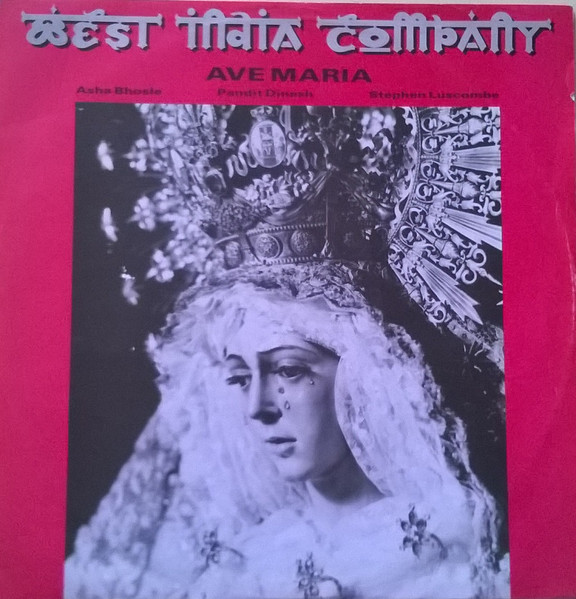
West India Company: "Ave Maria (Om Ganesha)"


"It all just goes to prove that you don't have to be American to have "soul" and that unlikely-sounding cross cultural experimentation can be fun."
— Dave Rimmer

Residing in Britain in the late eighties meant that I was able to experience one of the most exciting 
— albeit rather unsexy — Christmas number one battles. The three main contenders were Bros' double-sided "Silent Night" / "Cat Among the Pigeons", Kylie and Jason's "Especially for You" and Cliff Richard's "Mistletoe and Wine", the eventual victor. Some of the longshots did well with top five hits (Erasure's Crackers International EP, Angry Anderson's slushy Neighbours wedding theme "Suddenly", the still-oustanding "Buffalo Stance" and "Good Life" by Neneh Cherry and Inner City respectively) while others (the Reggae Philharmonic Orchestra's take on "Minnie the Moocher", Alexander O'Neal's cover of "The Christmas Song") only managed to creep into the lower end of the hit parade. While the winner and some of the also-rans remain fondly remembered to this day, few even knew at the time of some of those records that really came up short. Among those who nabbed a festive flop was George Van Dusen, an octogenarian yodeller whose fifty-year-old recording of "It's Party Time Again" was tipped as an early dark horse for a seasonal smash but who ended up getting no further than number forty-three. This modest placing, however, dwarfed the performance of a farmer and his pet pig who oinked their way through a novelty record that went absolutely nowhere (and which is so obscure that I was unable to find a YouTube clip and am going strictly off of memory).

Back in '84, just as the Christmas number one sweepstakes were really becoming a thing, this proved to be the fate of West India Company. William Hill was yet to put up betting odds but the competition was still intense. In addition to the heavy favourites — more on that next week — there was strong competition from the likes of Paul McCartney, Madonna and Paul Young (all given mixed reviews by a fussy Dave Rimmer) as well as Tears for Fears, a pre-disgraced Gary Glitter and some song or other from a movie you may have heard of from Ray Parker Jr. Plus, the Christmas season tends to give chart holdovers a second wind and this aided the prolonged sales of singles by Murray Head, Shakin' Stevens and a rebounding Stevie Wonder. Then, you have reissues of perennial favourites "I Wish It Would Be Christmas Everyday" by Wizzard and "Merry Xmas Everybody" by Slade. In this landscape, is it any wonder that a cross-cultural, interfaith, multi-genre record by a supergroup of lesser known folk (is it possible to be a supergroup if no one is particularly famous?) 
would come up well short of a Christmas hit?

Short of asking members Asha Bhosle, Pandit Dinesh and Stephen Luscombe, it's impossible to know if they were even attempting to crack the festive charts with "Ave Maria". Nevertheless, release a single at the tail end of the year and you're putting yourself in contention for the crown even if it's the furthest thing from your mind. The song's spiritualism and mashing up of the Virgin Mary with the God of New Beginnings, Success and Wisdom provides some seasonal warmth, wrapped up in some dreamy sythns and emerging into one of the most unusual novelty records you're likely to come across.

Novelty record? This is hardly a farmer and his pet pig oinking out a Christmas carol, is it? Certainly not but, as the group admit themselves, West India Company was meant to be a "one-off project", a sideline from Bhosle's role as India's leading playback vocalist, Dinesh's freelancing as an in-demand percussionist to add some spice to western pop and Luscombe's part as keyboardist in Blancmange, so there's at least a hint of the novelty there. The one Brit among the trio, Luscombe admitted to admiring Bholse's singing, claiming that she makes "all these pop bands look so...puny." (Was he alluding to his own organization here? He might have done well to do so given what a mess they would soon make of ABBA's remarkable "The Day Before You Came") Yet, I can't hear this and not think that they're on holiday, a group of like-minded individuals (also joined by other members of Blancmange and a newly out of work Vince Clark) having a fun little romp in the studio and creating something really good that would be destined to not go any further.

Yet, "Ave Maria" should have only been the beginning. I'm somewhat with Rimmer on this one: the track is indeed "smooth and dreamy" and it carries a spark of freshness even thirty-five years on that is undeniable. Knowing now, however, that this wouldn't be carried on deflates my enthusiasm a bit. Spiritually uplifting synth-pop with dramatic production and exquisite vocals? Yeah, more of that please. Who knows? Had they carried on, they might even have managed to snag the '85 Christmas number from Shakin' Stevens, something I plenty of people would have welcomed.

~~~~~

Also Reviewed This Fortnight

Smiley Culture: "Police Officer"

Also of some novelty — and also just in time for Christmas, although I'm it's just as coincidental. With charm and a then-unique mix of rap and Jamaican toasting, the late David Emmanuel — AKA Smiley Culture — makes light of his petty crime and drug use and constant misfortune of getting stopped by the police and spins it all into something pretty wonderful and, as Rimmer says, funny. Our Smiley is having too much fun here for us to feel sorry for him — even if he would meet his eventual end during a police raid of his home. Sad but this top twenty hit remains a fitting tribute.

Wednesday, 13 November 2019

Sylvester: "Rock the Box"

8 November 1984

"His knowledge of the geography of the United Kingdom is shown up, however, as he assures us that people are rocking the box "all over Great Britain, from Liverpool to Wales". A distance, if I'm not mistaken, of not much more than 20 miles."
— Neil Tennant

Do the best pop stars have crap taste in music? Okay, that's a bit much but do they listen to stuff that's good enough to inspire them but not so good that it shows up their own creativity? Blues, three-chord rock, punk, disco, hip hop: the simplest forms of music seem to have a knack for inspiring loads of great musicians. If you're only ever listening to complex jazz fusion and prog rock and the like, you're liable to become an enthusiast - and even something of a talented muso but is it going to get you making recording sublime pop records? Or take power pop: I'm sure members of The Raspberries and Cheap Trick and Teenage Fanclub have or had fantastic record collections but it didn't stop any of them from making tedious, unadventuresome music of their own. This is Neil Tennant's eighth (and final) go at reviewing the singles and it's clear that his choice picks aren't close to the music that he'd very soon be making. Naturally, the five electro-dance cuts he picked have more than a little in common with what he and longtime partner Chris Lowe would make a highly successful career out of but they lack his wit, charm and pop touches; two of the three pop songs, however, lack the sonic thrills of classic Pet Shop Boys. (The one number not included here would be Billy Idol's which really does go to show you how pop music genius can sometimes find favour with a crap record) 

That said, "Rock the Box" is one of Tennant's better SOTF, probably the finest since The Associates' superb "Party Fears Two". As he says, Sylvester - along with writers/producers Ken Kessie and Morey Goldstein - crams absolutely everything in here. To an eighties dance music fanatic like Tennant it probably would have sounded like he had "nicked every electro cliché in the box" but thirty-five years on (and, to be sure, to someone who hasn't enjoyed dance music for nearly as long) it's stupendous, a roaring melange of swift scratching, synthy beeps and boops and effects that could be samples but for the fact that it's 1984 and they could very well have been coming up with this stuff from scratch. It isn't even as banal as Tennant thinks: had this record been made near the end of the decade we would have been greeted with that Funky Drummer sample, a more measured, far less subtle bit of scratching and those whoops and yeahs you used to hear on every single with house music aspirations. It would have sounded, in other words, like every club record of the age; "Rock the Box" gobbles up every idea and still sounds like nothing else out there.

This being a club favourite, however, it falls short lyrically, the words clearly taking a backseat to everything else going on even if Sylvester sings it pretty well. Concerned with how vital it is to rock ver box, there's not much of a story here but, then, why should there be one? As for Tennant's observation about old Syl's lack of "knowledge of the geography of the United Kingdom", it ought to be considered in light of just how little he manages to credit the vast majority of the citizens of his homeland. While "all around Great Britain, from Liverpool to Wales" may be unintentionally funny, the twenty or so miles covered is vast compared to an earlier line which regales of "all around Manhattan, from Brooklyn to the Bronx", an acknowledgement that while Britain had taken to him, the majority of the US wasn't as keen. A nice thought crediting the UK as a whole even if it didn't help the single which only just managed to dent the lower reaches of the charts. (Having said that, it must've sold like mad around Chester)

Finally, this is where Tennant bows out from the singles review chores. Perhaps not coincidentally, we're about to enter a more rockist and indie period in this section of the magazine - a trend which wouldn't begin to right itself until, also not entirely coincidentally, the rise of the Pet Shop Boys. Gone forever are the New York club records by the likes of Bobby O, Rockers Revenge and C.O.D. because their chief backer was busy cutting his own singles. Pop music's gain would be music criticism's loss: a trade off well worth making in spite of the price paid.

~~~~~

Also Reviewed This Fortnight

The Blue Nile: "Stay"

Pioneers of beautiful melancholic pop, taking forever to release albums and using the word 'Stay' as a song title a good ten years before everyone else did, The Blue Nile astonished critics and budding musicians (the ones with good taste in music so they may not have made decent records themselves) while the public remained largely numb to their charms. Resolutely as minimalist as they would ever be, it also happens to be far breezier than much of their noted work, anticipating a track like "Sentimental Man" by a dozen years. Given their minuscule discography and perfectionist tendencies, this could have been a typical part of their sound had they been able to churn out releases at the normal pop star rate. Tennant foresees a possible hit and what a world that would have been.

Wednesday, 6 November 2019

Duran Duran: "The Wild Boys"

25 October 1984

"But please, boys, don't make a video."
— Morrissey

"I'd sooner fry an egg than make a video."
— Morrissey

Two Morrissey quotes, one from his stint in the singles review chair (labelled 'Morrissey does his bit' in very childish printing just below a picture of the man himself), another from a point that I am unable to source — though it certainly must have been stated prior to the release of the video for "Girlfriend in a Coma", the first time he did a promo that he seems to have been involved in. When he's not going all hard right (which is increasingly rare), Moz is good copy. Whether he's lambasting Band Aid ("One can have great concern for the people of Ethiopia, but it's another thing to inflict daily torture on the people of England"), being baffled by the appeal of Samantha Fox ("...I throw everything up in the air and say, 'the world is slightly derailed'.") or describing — not inaccurately — his fans ("people who wear heavy overcoats and stare at broken light bulbs"), there's always a good Morrissey quip. Sometimes funny, occasionally perceptive, often reprehensible, always negative.

This being Morrissey, I'm amazed that he didn't find some irrational excuse to despise Duran Duran's latest record. Four pretty boys (and Andy Taylor) coasting on their status as pinups would seem to be fodder for the curmudgeonly Mancunian's ire. But, then, they're just a bunch of pretty boys and aren't a threat to him. He isn't looking for musical authenticity (the man did a Twinkle cover for god's sake) and has a long-held admiration for fashionable, iconic faces. Plus, "The Wild Boys" as a song title alone must have appealed to him. He may have thumbed his nose at the likes of "Rio" and "Hungry Like the Wolf" (though I have no way of knowing either way) with their exoticism and carnality but not a song that taps into a Lord of the Flies homoeroticism (even they've got "sirens for a welcome"). I can't say that I agree with Moz's take on Simon Le Bon's performance ("Fine fiery vocals"? Not, "workmanlike singer struggling mightily to hit notes well past his limited range"?) but single is decent, not among their finest work but not a giant howler either. No one else rates "The Wild Boys" as their favourite Duran Duran song, do they?

Still, Morrissey did find the time to knock their mastery of the pop video, hoping against hope that they'd opt not to bother this time round. Hard cheese, Moz. Having previously stated that a "drunken goat" could have directed one of their videos, it's likely that their promos were spoiling Duran Duran for him. It would, thus, be interesting to see if his opinion would have altered had a naughty Smash Hits staff member managed to procure a copy of "The Wild Boys" vid and shown it to him. Gone are the yachts, replaced with a bad dream scenario of monsters coming out of swimming pools and attacking people or something. Though acclaimed by some at the time, this had to be their first promo which failed to capture the public's imagination. This meant little to Morrissey either way but I suspect he would have opted for Prefab Sprout (the rightful SOTF) or XTC or Lloyd Cole instead. For spite.

Not wanting to focus on the Duranies, I've decided to include a special analysis of every record Morrissey reviewed this fortnight.

Hazell Dean: "Back in My Arms"
Morrissey's 'Vilest Single Of The Fortnight' is trivialized a bit by describing the vocalist as a "creature" and imploring the "boys" to "stretch her on the rack". Value judgement as criticism. Song isn't much cop though.

Chaka Khan: "I Feel for You"
A "clever" record which probably means that his nibs liked it a lot more than he'd care to admit. Doesn't appreciate that it's composed by "romping travesty" Prince though my only complaint towards this otherwise brilliant single is that it's not called "I Feel 4 U": since when did the Purple Perv refrain from abbreviation?

Nick Heyward: "Warning Sign"
Moz gets this one exactly right with Nick wasting his many talents on lame American r & b. Stopped clocks, etc., etc.

The Redskins: "Keep on Keepin' On"
Does Morrissey actually like this one? They should be "canonized"? You wish them to be dead and then given their due? Harsh.

Miami Sound Machine: "Prisoner of Love"
A good line here about "stealthy eroticism which makes a life of religion madly attractive" but, sadly, inaccurate. Gloria Estefan has probably the least sexy voice in the history of pop and, if anything, it's closer to "forced eroticism". But, yeah, the song is balls.

Shriekback: "Mercy Dash (Ready for This)"
Perhaps a case of 'unspectacular record = bland review'. Could my tastes refrain from dovetailing with his?

Modern Romance: "Move On"
There are indeed worse human beings than Morrissey. But can anyone seriously think of one? (But, again, he's right)

Status Quo: "The Wanderer"
On a bitchiness roll, Moz gets to ver Quo, probably the group least likely to titillate Morrissey in any way and on any level. Right on the money.

Lionel Richie: "Penny Lover"
Not one of the high points of Lionel's eighties, granted, but Moz gets riled up far too much here, blaming the record on an "unholy amount of human misery". I suspect he'd say much the same about "Easy" and "All Night Long" and "Say You Say Me" which just means he's dead inside. But we all knew that already, right?

XTC: "This World Over"
See below.

Bucks Fizz: "Golden Days"
The low-hanging fruit so I won't castigate myself too much here for agreeing with Moz.

Tracey Ullman: "Helpless"
Or, as Moz calls it, "Hopeless". Hard to argue with him there.

The Psychedelic Furs: "Heartbeat"
American influence really irks this future resident of Los Angeles.

David Sylvian: "Pulling Punches"
Unable to enjoy depressing tunes, Morrissey isn't able to fathom the appeal of David Sylvian. Yeah, it sucks to have pop stars foisting their misery upon the public, doesn't it?

Ultravox: "Love's Great Adventure"
Not a favourite of Moz but I would've expected a great deal more irrational bile reserved for Midge Ure and his slicked back hair and bum fluff moustache and weedy tunes. Instead, he expects a revolution from the great pop chancer. Did he change his tune a year later following Band Aid and Live Aid, perchance?

Level 42: "The Chant Has Just Begun"
You have to be plenty drunk to enjoy a Level 42 record, you know. And there I was thinking you had to be a great big muso, much more interested in solos than pop songs. Thanks for clearing that up, Steven.

Cyndi Lauper: "All Through the Night"
Morrissey doesn't think Cyndi Lauper is much cop. Because of course he doesn't.

Lloyd Cole & The Commotions: "Rattlesnakes"
America has gotten to "Cousin Lloyd" too and that just won't do. I have nothing to base this on but I foresee the wheels coming off that friendship pretty sharpish. Just a hunch. Cousin Lloyd is probably better off.

Prefab Sprout: "When Love Breaks Down"
"A dirty great big fat hit"? Did Morrissey even listen to the bloody thing? Not "beautifully crafted poignant pop"? Not a "lush, bittersweet kitchen sink drama that I cannot stop playing"? I'd settle for "more spineless than an especially timid earthworm" if he hadn't cared for it.

Force MDs: "Forgive Me Girl"
A case can be made that 'bitter, spiteful Morrissey' is preferable to 'apathetic, bored Morrissey'. On the other hand, I'll take a 'reclusive, sitting on his millions, prone to cancelling concerts at the last minute Morrissey' any time over the 'Guardian-bashing, Tommy Robinson-supporting crotchety old git Morrissey' that we've sadly become all-too familiar with lately.

Scritti Politti: "Hypnotize"
Overlooking the negative things Green Gartside had to say about The Smiths (though, he still felt the need to bring it up), Moz acts as the bigger man and praises their latest record. Can't figure out if his quip about the singer having "finally mastered his Deanna Durbin impression" is a shot or not. Probably both.

Alphaville: "Forever Young"
Had Morrissey drowned the members of Alphaville at birth then he probably would have gone to jail and we would have been spared (a) some great records, (b) lots of mediocre records and (c) having to care about the claptrap that comes pissing out of the mouth of Steven Patrick Morrissey. An upside, with all due respect to Alphaville.

Siouxsie & The Banshees: The Thorn
An odd one. Morrissey likes the fact that this EP is good value for money but doesn't think much of the songs. Not particularly good value then, is it? Still, it's sort of nice that he didn't save all his vitriol for those he wishes dead and buried.

Of the twenty-four records he reviewed, sixteen he disliked or despised. (Correct that: sixteen he despised; the man doesn't do things by halves, as they say) Not being one to be content with just liking a song, he also managed to eek in some harsh words in five additional singles he actually liked, including the supposed 'Bestest Single Of The Fortnight'. That leaves us with three that he didn't feel the need to slag off in any way. Except for a suspiciously-worded review of one entrant that leads me to suspect he didn't listen to it at all and one that could be inferred as being underhand praise. Which leaves one bloody record that pleased this grumpy old crow. And, yet, I seem surprised. All it took was making a video or having a duff record or not approving of said act or not having been aborted at birth brought out his hate. You'd like for him to refrain but then he just wouldn't be Morrissey, would he?

~~~~~

Also Reviewed This Fortnight

XTC: "This World Over"

The only record on offer that Morrissey has nothing but good things to say about. Now well into their residency in the dumper, Andy Partridge was under strain from Virgin Records to come up with something more commercial. Being as bullheaded as Morrissey, XTC's leader is having none of it and, instead, delivers a challenging and, in some places, unlistenable LP The Big Express. Happily, the singles are top notch and none better than "This World Over". Moz doesn't seem aware of how insanely erratic Swindon's finest could be which likely saved them from his scorn. Dealing with nuclear war fallout, the song seems just as relevant today with the imminent threat of climate change hanging over us all. Not that any of this matters to Morrissey: I'm sure in his mind the world has already ended ever since his critics began "silencing" him. You'd think he'd be better equipped at taking it, huh?

Kim Wilde: "Love Blonde"

21 July 1983 "Now that summer's here, I suppose the charts are likely to be groaning under the weight of a load of sticky, syrupy s...