Wednesday, 9 February 2022

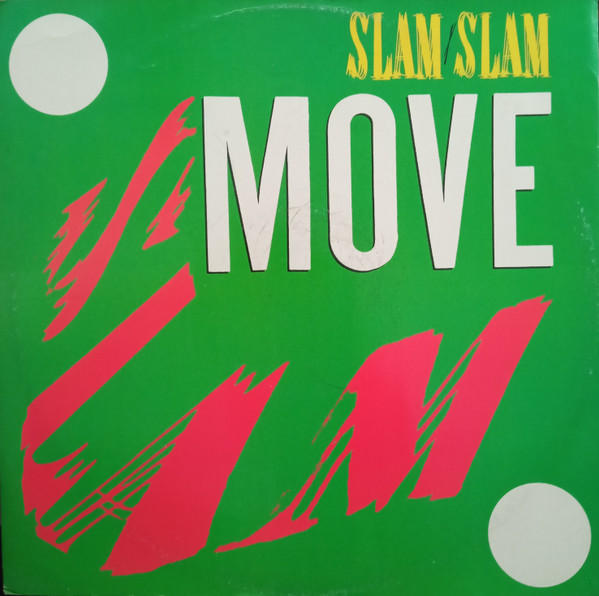
Slam Slam: "Move (Dance All Night)"


"It's a brilliant example of what a good dance record should be — whereas the Pet Shop Boys isn't."
— Dr Robert

Neil Tennant and Chris Lowe had been the darlings of UK pop for almost four years by the summer of 1989. Not a whole lot of time, no, but more than enough for them to have seen off a host of groups who came and went as well a series of changes in tastes among the public. Due at least in part to Tennant's previous occupation, they never seemed to lose favour with critics, even when their film was panned or when they toured to mixed reviews. 1989 had been their quietest year to date but they still had yet another Top 5 hit, played concerts in the UK and Asia, wrote and produced successful records for both Dusty Springfield and Liza Minelli and were relevant enough with ver kids that they finished second in that year's Smash Hits reader's poll.

Yet some were beginning to tire of the Pet Shop Boys. Harriet Dell exposed the first crack earlier that summer by not being terribly fussed by their latest single "It's Alright". (Erasure weren't all that impressed by "Heart" but they liked it enough to make it their Single of the Fortnight) Hits "viewer" Alison Taylor of Paisley objected in the letters page to their "obnoxious" attitude in a feature from early July and predicted that the "dumper beckons" for the pair. (Tennant and Lowe memorably fretted over this piece of correspondence in Chris Heath's superb book Pet Shop Boys, Literally; Alison would receive a sternly-word response from "The Boys' Defender" in Leicester in a subsequent issue in August) And now Dr Robert of the Blow Monkeys weighs in not once but twice with his own thoughts about why the Pet Shops aren't up to much. (He also bashes them in a review of Liza Minelli's cover of "Losing My Mind" which they produced; at least this trashing is connected to the record in question)

The "good" doctor wasn't just a member of the Blow Monkeys, mind you. He was also behind the very record he pushes for this fortnight's top single honours. Yes, Slam Slam were a dance pop unit made up of Dee C. Lee of The Style Council and one Robert Howard, aka Dr Robert. He might have mentioned the conflict of interest as Jools Holland, Martin Degeville and Neal X were good enough to do (Loadsa "Francis" Money didn't bring it up either but what's the use of having scruples if you've got plenty of dosh?) but he decided to act as if he just happened to bring in a record at random to share with the peeps at ver Hits. Top bloke.

I'll get to him raving over his own record in short order but I want to discuss his disgust with the Pet Shop Boys first. Robert seems to reckon he's a dab hand at dance music and he's actually not wrong. While the Blow Monkeys were faltering with a series of forgettable singles, he and Kym Mazelle somehow struck gold with "Wait", a fantastic deep house duet that gave the pair of Top 10 hit in the early part of 1989. His band had never shown any inkling for modern house music previously but he managed just fine. Deep house was something that English pop stars were beginning to explore at around this time with both The Style Council and — huh, imagine that — the Pet Shop Boys enjoying chart action with covers of club favourites "Promised Land" and "It's Alright" respectively. To Robert's credit, he managed to compose his own effort. This success must have given him the idea that he was suddenly an expert at crafting serious dance pop, one far in advance of amateurs like Tennant and Lowe. He had bona fides to build up in the minds of the kids and within the industry: why not try to do so by knocking down the competition?

Unfortunately, "Wait" was not something he could easily recapture. The single quickly got snapped up for third Blow Monkeys album Whoops! There Goes the Neighbourhood but subsequent singles "This Is You Life" and "Choice" only benefited minimally, not helped by the fact that neither of them were any good. Robert had to look elsewhere to build upon what he started. The Style Council's cover of Joe Smooth's "Promised Land" had given them a minor hit to go with their Singular Adventures of the Style Council compilation album but the group got dropped by Paul Weller's longtime label Polydor due to being dissatisfied with the deep house-influenced Modernism: A New Decade, an LP that would remain unreleased for almost a decade. So why not join forces?

With Howard, Weller and Lee having been part of the Red Wedge tours, there was every reason to expect more political pop from their latest project Slam Slam. But The Style Council had begun moving away from overtly left wing proclamations in their songs following arguably their finest album Our Favourite Shop and Dr. Robert's socialist convictions were being spurned by record buyers who preferred "Wait" (a song that, to be fair, has a subtle political message of its own). More importantly, very little of the genuine musical talents of these three manage to shine through on a track like "Move (Dance All Night)". At best it captures that tried and true disco parable of ordinary people living miserable lives who find solace in being stars on the dancefloor. Quite what these three very skilled individuals had in mind by churning out bland, tenth rate house music is anyone's guess.

Nevertheless, the single's poor chart performance (on multiple tries at that) combined with the relative anonymity of the pop stars behind it meant that "Move" wouldn't end up being a serious blemish for the parties involved. Further Slam Slam records did well in dance circles and they would even release an album but they were done within a couple years. Weller would kick start his very strong solo career, Lee would pop up here and there and Dr Robert would continue to work with the two from time to time. The Blow Monkeys would end up reforming in 2007 and they're a better band now than they ever were when they were having hits. His nibs went from trying to be an expert at genres he didn't know much about to doing what he does best. There's always going to be a place for singing and writing fine material for a stylish pop group.

~~~~~

Also of some cop

Fine Young Cannibals: "Don't Look Back"

Less characterful than "She Drives Me Crazy" and "Good Thing", "Don't Look Back" is actually the FYC single that I think of first when they come to mind. The two big hits were both kind of gimmicky but this one felt like something that came naturally to the trio. Roland Gift's voice sometimes gets on my nerves but the crunching pop power pop drowns him out enough that I'm not so bothered. I understand people not liking it (the record fell way off from the heights of the previous two, particularly in Britain) and even Dr Robert's critique makes sense — yes, it does sound "like The Bangles" (although I'm not sure how that's a bad thing) and it does sound like a "tired piece of American new wave" — but I like it all the same. The riff is a bit like "Day Tripper" and it has frantic energy that's not unlike what lesser known Cannibals Andy Cox and David Steele did back when they were in The English Beat. As I say, it's best to stick with what you know.

Sunday, 6 February 2022

R.E.M.: "Stand"


"It's brilliant. I love this. It sounds like a song we like by a band called The Pixies."
— Shirley Manson

"It's a good pop record and I like it because the guitar solo's slightly incompetent."
— Martin Metcalfe

Oh blimey!! Not another special edition of VER HITS!!!

Until now, special editions of this blog have covered Record Mirror and both the American and Australian versions of Smash Hits but I had yet to write about the magazine's chief competitor and bĂȘte noire Number One. Established in 1983, it was never able to escape the shadow of ver Hits despite the fact that it was a weekly rather — than a fortnightly — publication. The writers generally weren't as good (sorry John Aizlewood), the layout looked cheaply done and it catered a little more toward celebrity gossip. They did print the weekly Top 75 singles and albums charts but these listings came from The Chart Show and they never quite matched the proper Top 40 on Radio 1 and Top of the Pops. (In this particular issue, the singles that made up the Top 10 are the same albeit in different order)

It may sound like I was never a fan of Number One but I used to buy it semi-regularly. I could get impatient during that two week wait between issues of Smash Hits and picking up a copy of its poor cousin satiated my desire somewhat, even if I would never shell out for it when the real thing was available. While music journalists such as Andrew Panos and Ro Newton would sift through the new releases in past issues, it had since become all about having guest reviewers by the end of the eighties. Being a weekly, it's clear they often had to scrape the bottom of the barrel to find enough pop stars, DJ's and other celebs to do the deed. Among the "big" names they had during my state in the UK were Climie Fisher, Angry Anderson and Swedish "sensation" 2 Brave. Not all of them were third rate but enough were to make the singles review page much more of an ordeal than it was in Smash Hits. It was for this very reason that I held off writing about the singles in Number One until now: I couldn't find a single and/or reviewer that I felt any desire to write about. I didn't buy this issue but I would have had I been paying attention. I would subsequently buy two more import copies of Number One in Canada and I am planning to write about those when they come up.

Martin Metcalfe and Shirley Manson are this issue's reviewers. The lead singer and keyboardist/backing vocalist out of Goodbye Mr Mackenzie respectively, they had one Top 40 entry with the punchy "The Rattler", a record that owed as much to the Celtic stadium rock of Big Country and Deacon Blue as it did to indie stalwarts Orange Juice and The Jesus and Mary Chain and one that deserved to do better than its modest number thirty-seven placing. Much like the group they picked for their Single of the Week, they seemed set for big things. One of them would go on to enjoy a remarkable career but they would have to wait a bit.

A big thanks as always to Michael Kane's excellent Flickr page for providing the scans from this issue. I highly recommend it for everyone who loves their music magazines.

~~~~~

It was Friday, August 4, 1989. I was wearing the Coca-Cola denim jacket my mother bought for me eighteen months' earlier. The sleeves were much shorter than they used to be. My baseball cap was only able to balance on the top of my head. I had already outgrown the life I had left behind in Canada a year earlier and now I was outgrowing the clothes I had brought with me. Why on earth was I heading back at all? (Oh right, because my parents said so)

Gatwick was a lot brighter and more modern than I remember it being fifty weeks earlier. It had all been a blur when I was first there but now I was just to glum to notice much. Such was my state that I didn't even have a look around. Had I peaked inside the WH Smith's that the airport almost certainly had, I would have noticed that there was a new issue of Number One that I didn't have. It would've added a flicker of joy to a day that I had been dreading. I hadn't wanted to go to England a year earlier and now that I had been here a while, I didn't want to leave. Having a fresh copy of a second-rate pop mag for the eight hour flight back to Canada would have made the trip that little bit less unbearable.

Still, I didn't miss much. The cover "story" involves TV's Lenny Henry answering a series of silly questions as his famous characters Theophilus P. Wildebeeste and Delbert Wilkins, the latter of which he put to more amusing use five years earlier when reviewing the Smash Hits singles. Elsewhere, there's the first in a two-part feature on songwriting/production monolith Stock Aitken Waterman (who bristle at criticism leveled their way while also claiming that groups like U2 and The Smiths are boring), Bruno Brookes' Radio 1 Roadshow Diary (those roadshows never seemed like much fun and this page confirms it) and yet another round of The Genius of Pop, in which various "stars" take a quiz on, you guessed it, pop music. On the plus side, the Indie singles chart is a welcome reminder of what an excellent year 1989 was for alternative music and, as if to confirm it, Martin and Shirley from Scottish group Goodbye Mr Mackenzie review the singles.

R.E.M. had spent much of the eighties quietly building up an outstanding back catalog. A raw, early pressing of the brilliant "Radio Free Europe" followed by the Chronic Town E.P. got the ball rolling and they would go on a hot streak of six albums in six years. Success was modest at first but it grew over the course of the decade, especially in North America where they toured extensively and were a staple of the so-called college rock scene. The word-of-mouth on albums such as Murmur and Lifes Rich Pageant was so good that their slight creative dip beginning with 1987's Document did nothing to halt their momentum. Indeed, single "The One I Love" gave them a Top 10 US hit that year. They had been poised for a breakthrough for some time and now it was coming.

Across the Atlantic things took a bit longer. Both "The One I Love" and "Finest Worksong" came close to reaching the Top 40 but fell short and the same fate befell "Stand" on its initial release at the start of 1989. Albums Fables of the Reconstruction, Document and Green all did reasonably well and, again, a breakthrough seemed inevitable. Then, "Orange Crush" gave them at Top 30 hit which led to a memorable performance on Top of the Pops in which Michael Stipe "sang" into a megaphone. The single fell off a week later but it was looking like this was going to be R.E.M.'s time in the UK. Two short years later and it finally was!

The Green album wasn't exactly packed with potential hit singles so someone decided to give "Stand" another try. It was at this point that Martin Metcalfe and Shirley Manson gave it their stamp of approval in Number One. Perhaps because of it being a reissue, they already seem familiar with it, with Manson mentioning how much she likes the video. But neither of them seem to know all that much about R.E.M. and if you didn't know any better you'd be convinced that this was their introduction to the Athens, GA foursome. Shirley's comment above about "Stand" being not unlike a single ("Here Comes Your Man" perhaps? It was currently on Number One's classic-packed Indie chart and is like a rich cousin to "Stand") by the Pixies implies she knows more about the latter than the former. (To be fair, Pixies were a much better group at that point, their albums Surfer Rosa and Doolittle far outpaced Document and Green, at least in terms of quality if not in numbers shifted) Metcalfe's praise for the "incompetent" guitar playing also indicates how little they knew: Peter Buck was an indie guitar hero to some but he didn't mean shit to the members of Goodbye Mr Mackenzie.

What all this really tells you is that R.E.M. still had a ways to go before conquering Britain. While "Orange Crush" at least has a strong beat, "Stand" and "Pop Song 89" (passed over as a single in the UK) began to expose them as a band that could get repetitive. All three songs have basic opening verses, choruses and not much else. They had nothing on the glorious jangle-pop of "So. Central Rain" not the mournful singalong "Fall on Me". (The Green album did have some nice deep cuts — the achingly lovely "You Are the Everything", the crunchy "Turn You Inside-Out — but overall it's an uncharacteristically inconsistent work) R.E.M. had lost their way and they would use their climb to the top of the pop mountain to reclaim it — for a while at least.

The future of rock was there on page 42 of this issue of Number One and not just due to the Single of the Week. Shirley Manson was a young Scots pianist and backing singer who would one day be part of a group that would rival R.E.M. in the 'biggest band in the world' stakes. Garbage was a subtly fine group that cleverly merged American grunge with UK shoegaze, filling a void that no had even noticed. They weren't exactly a favourite of mine but they certainly gave some life to the depressing music scene of 1995 that was overloaded with ghastly US frat rock and the self-parody ridden Britpop. Meanwhile, R.E.M. spent the year I graduated from high school on a highly lucrative world tour that proved to be the beginning of the end for them. And all this from a pair of groups that had two minor hits between them in 1989. Yeah, those big breakthroughs would come eventually.

~~~~~

Also of some cop

The Beatmasters featuring Betty Boo: "Hey DJ / I Can't Dance (to That Music You're Playing)"

Paul Carter, Manda Glanfield and Richard Walmsley weren't exactly pop star material but they knew more than a little about crafting great dance pop and finding charismatic stars to lead the way. They brought back P.P. Arnold for the appropriately-named "Burn It Up" but most of their guest stars were young. Cookie Crew, Merlin and, this time, Betty Boo: it looked like they had found the future of British hip hop and house music. Alison Clarkson had a tough style and pin-up looks and her Betty Boo character ought to have become even bigger. "Hey DJ" does the trick of setting up Boo as a player while once again affirming The Beatmasters as an overlooked force in British dance-pop. One of those fine records that I missed out on because my mum and dad just had ship us back home. The nerve of some people.

Saturday, 5 February 2022

Fleetwood Mac: "The Farmer's Daughter"


"A cunning choice from their live album."
— Mike Stand

Indeed. What could be better than to promote a live album with a single recorded in a studio?

We like to think that the live experience is authentic and it's an easy delusion to maintain if we so desire. We don't have to examine the stage to see the setlist and name of the city taped to the stage. We can convince ourselves that the between-song banter ("let's play this song...you know, the easy one...even you can play it!"; oh, the hilarity) is impromptu. We can rationalize that the singer getting choked up in an emotional moment was a one-in-a-lifetime thing and there's no way he or she would repeat the trick the next night.In truth, however, these sorts of tricks are easier to spot than the secrets of a scripted wrestling match. And pop stars know it and that's why most live albums are embellished in the studio.

In 1979 Fleetwood Mac chose to follow the insanely successful Rumours with Tusk, a supposedly difficult double album that supposedly turned millions of fans off. It's difficult now to understand why things fell off so spectacularly for them: for all those catchy if somewhat jarring new wavy tracks from Lindsay Buckingham, there are still the contributions of Stevie Nicks and, in particular, Christine McVie which underscore the fact that they hadn't changed all that much at all. (Songs like "Sara", "Storms", "Brown Eyes" and "Never Forget" hold up against anything else they ever did, to say nothing of excellent Buckingham cuts like "I Know I'm Not Wrong" and "Tusk", probably their finest single) It didn't sell anywhere close to its predecessor but factors such as changing tastes and the two disc set being pricey likely contributed at least as much to their commercial decline.

Nevertheless, there was still enough of an audience out there for them to embark on a world tour that was even bigger than two years earlier when they toured Rumours. Playing well over a hundred shows in North America, Europe, Japan and Oceania in just under a year, Fleetwood Mac's setlists leaned heavily on material from both Rumours and Tusk, as well as their 1975 self-titled album which kicked off the group's Buckingham-Nicks golden era. Being so well stocked in quality songwriters, they weren't much inclined towards padding out their repertoire with cover versions. As such, "The Farmer's Daughter", a deep cut on The Beach Boys' 1963 album Surfin' USA, was never performed on the tour, not even in a backstage soundcheck for a selection of family and friends.

On the Live album released at the end of 1980, "The Farmer's Daughter" features a smattering of cheers at the end and the recording is drenched in echo: just what you might expect if they were playing a lighthearted little number for shits and giggles while warming up for a concert in Champaign, Illinois or Valley Center, Kansas (no matter how obscure, there isn't a US city bands won't play even if they'll bypass metros of several million in other countries); in fact, it was recorded during the Tusk sessions, minus the crowd noise and effects. If live albums could be enhanced in the studio, why not cut songs in the studio disguised as live?

Why did they choose to record it all? It's hard to say but Buckingham was a lifelong fan of Brian Wilson while McVie was in the midst of a relationship with Dennis. The Beach Boys spent the early part of the seventies flourishing creatively with albums such as Sunflower, Surf's Up and Holland but their stock had fallen by the time Fleetwood Mac were on the rise. Their increasingly poor run of albums of late didn't harm their status as a popular live act and the two groups were among the most popular concert attractions in pop. More to the point, the original dates back to their early period as a surf rock group and little if any care seems to have gone into their recording of "The Farmer's Daughter". Brian was already a formidable talent in pop but his compositions were rushed and his bandmates weren't capable enough musicians to do his work justice.

Fleetwood Mac's version indicates what might have been, had Brian been able to record it his way and/or had Carl Wilson been allowed to give it a much more of the delicate vocal treatment it deserved. McVie and Nicks purr their way through a gorgeous recording, with just some simple guitar chords to guide them along the way. It's a little more restrained than much of what's on Tusk, as if ver Mac weren't quite sure what they were doing with it, but that's probably advantageous. It wouldn't have fit on the album and it was likely never in consideration but it's surprising that they couldn't have placed it on a B-side. Instead, they threw it on their first live LP, a curio of what you may have missed had you not gone to see them. Turns out, you would've missed it even if you had been there.

~~~~~

Also Reviewed This Fortnight

Joe Dolce's Music Theatre: "Shaddap You Face"

And while we're on the subject of fake live recordings, Joe Dolce made a career out of this unfunny cringe-fest loaded with cod-Italian and lazy stereotypes — and with an "audience" joining in at the end! Mike Stand hates it, Tom Ewing hates it, this humble blogger hates it but who can argue with those millions of listeners who were charmed enough by that they helped make this vile record a global smash all over the world in the early part of 1981. Mercifully, it doesn't get played much anymore which no doubt prompts certain reactionary types to cry that it's yet another sign of how depressingly woke we've all become. I say that the song's offensive and terrible and deserves to be forgotten. Who's to say who's correct?

Wednesday, 2 February 2022

"Batman: Original Theme"


"I didn't realise that it was written by Neal Hefti who used to work for Frank Sinatra 
 and we're all big Frank Sinatra fans, as you know."
— Gary Clark

"The lyrical content is great too. Straight to the point. Batmaaan...Batmaaaan!!"
— Kit Clark

"I've heard that the Joker has cigars that blow people's heads off. Sound good to me!"
— Ged Grimes

And the streak is over. After thirteen issues of Smash Hits and fourteen Top 40 hits, at last we have a flop. The last time a chart non entity had been named Single of the Fortnight was way back in January of 1989 when Tom Doyle handed the crown to Squeezebrain & The Machine featuring J.J. Jones for "Lovegroove". In the six intervening months we had gigantic worldwide smashes ("Like a Prayer", "Back to Life"), hits for artists on the rise ("Manchild", "Say No Go"), chart returns for faded stars of the past ("Nothing Has Been Proved", "I'm Every Woman") and at least one gem that hardly anyone remembers anymore ("You on My Mind"). But they all dented the Top 40. This one? Not so much.

Mainstream popular culture in the summer of 1989 was all abuzz over Tim Burton's Batman. Beetlejuice had been released a year earlier and proved to be a hit. For the director's next project to be the Dark Knight, the hype was tremendous, even in this pre-internet age. Displaying a trait which would eventually become tiresome, Burton returned to the well by casting Beetlejuice star Michael Keaton in the role of Bruce Wayne/Batman but the other big stars (Jack Nicholson, Kim Basinger) were not rehires. Prince had even signed on to put together the soundtrack. This Batman movie was going to be a big deal.

The British, however, were just going to have to wait. Hollywood blockbusters would typically be delayed prior to being shown outside of North America and in this instance, Batman wouldn't come out until closer to the end of the year. Thus, they had to make due with the music and Prince's "Batdance" single swiftly rocketed up the charts and only came up short of becoming his first UK number one because of the immovable Soul II Soul. The soundtrack also did well, giving the Purple Perv his second chart topping album. If the British weren't one hundred percent sold on Batman, at least Prince could be relied upon to shift some "units".

Strategic reissues are nothing new in the music business, especially when rival record labels are concerned. I knew less about the record industry when I was twelve than I do now in my forties (and I still don't know much about it) but a re-release of the original "Batman" from the sixties' TV series at this time didn't surprise me at all. I had spent a year in England following the charts and there had been a drippy and pathetic power ballad that got to number one simply because of a Coke commercial. Shortly after arriving the previous August there had been two different versions of "He Ain't Heavy (He's My Brother)" vying for chart supremacy at the same time. (I didn't care all that much for the better-known recording by The Hollies but it is vastly superior to the deplorable "reading" by erstwhile Righteous Brother Bill Medley from the soundtrack of Rambo III) That autumn, Tom Jones teamed up with synth experimentalists the Art of Noise for a cover of Prince's "Kiss"; the much better original by his nibs would be promptly back in the shops even though no one bothered with it at that point.

Giving their thumbs way up to the Neal Hefti composed, Nelson Riddle conducted "Batman" are the Scottish threesome Danny Wilson. A zany trio, they crafted meticulous records but never acted as if they were above the pop "game". Indeed, they could easily have acted all high and mighty about their choice for Single of the Fortnight while rubbishing the state of current music. In fact, they don't have a lot positive things to say about most the other pop fare but they keep their negativity to the music and to poking fun at their contemporaries, as one should. Neneh Cherry's admittedly rather twee "Kisses on the Wind" reminds them of the jingle for Skittles, The Lilac Time are compared to a flat bottle of energy drink Lucozade, they consider putting the Then Jericho sleeve on the turntable in place of the actual record ("I bet it would sound a lot better!"), Big Fun are dismissed as being not unlike poor chocolate biscuits and the latest from Simple Minds sounds "like a Billy Idol record that somebody had spilt their tea on" (irrefutably true). Slagging off modern pop has never been such fun!

Still, it wouldn't have killed them to have a pop at "Batman" for good measure. With Hefti and Riddle in charge it was always going to be a sturdy enough theme tune, one that a good chunk of the populace would still be familiar with to this day. While the chorus is kept afloat by a rudimentary surf rock beat, it is the funky jazz solos in the bridge that really brings it to life. The cries of "BATMAN!" may well be iconic but they sure are lacking any kind of passion. The overly emotive Neal Hefti Singers would've been a welcome improvement on these staid lasses. Otherwise, there's not much to quibble about though I'll still take The Marketts and their outrageous cover version over this.

Finally, it's worth noting that this would be my final issue of Smash Hits. When it hit the shops in the last week of July, I was on a coach tour in Italy with my family along with an assortment of British and American tourists. By the time the following edition had been published, I was back in Canada. In the meantime, we would return to Britain for a few days before our departure on August 4. One of my final activities in the UK was a day trip to London with my dad and sister. My mum chose to stay home and get things packed. In her haste she grabbed the stack of Smash Hits and Number Ones on the floor next to my bed and threw them out (as well as the oversized farewell card that everyone in my class had signed for me on my last day of school which, naturally, I had intended to keep). This issue was one of the few that survived the purge. The singles review by Danny Wilson was something I would re-read over the next few years as I began to contemplate a way in to this pop world, a place I am still nowhere close to penetrating.

~~~~~

Also Reviewed This Fortnight

Shakespears Sister: "You're History"

Bananarama had Keren, the good looking one, Sarah, the confident one, and Siobhan, the talented one. (She would be replaced by Jacquie, the other one) That was the narrative at least. Shakespears Sister began as a solo project for Siobhan Fahey following her departure from the 'Narns but it gradually became a group with helium-voiced Marcella Detroit joining in. Gary from Danny Wilson reckons it sounds too much like Eurythmics while Ged wonders if Fahey's hubby Dave Stewart worked on it in secret. Proof that going all dark and edgy can't save a poor record, even if the good looking one, the confident one and the other one were proving to be no better off with their awful reworking of the once great "Cruel Summer".

Wednesday, 26 January 2022

Redhead Kingpin & The FBI: "Do the Right Thing"


"He's one of the those rappers whose words trip of the tongue with such casual ease, it makes the point he's trying to put across sound utterly simple and totally and completely obvious."
— William Shaw

It was 1968 and pop music was going through yet another sea change. The Beatles released the so-called White Album. The Byrds put out the influential Sweetheart of the Rodeo. The Beach Boys delivered Wild Honey at the tail end of the '67 and followed it with Friends, both of which had dialled back from the days of 'pocket symphonies' "California Girls" and "Good Vibrations". The Kinks offered up The Village Green Preservation Society, their highly unsuccessful...

Wait, did I already go into all this? That's right, just last week I was going on about how the predominance of acid rock in the late-sixties had been exaggerated, especially given the fact that seemingly everyone at the time was doing against the supposed tide of psychedelic pop. This I then connected to rap having a reputation for being all about showing off and gold medallions and fancy cars and stuff when in actual fact most of the big names were busy creating hip hop records that dealt with a wide-variety of topics. Last week, comical hippies De La Soul proved they could be serious and fly in the face of all that rap posturing and this time it's the turn of a young man named David Guppy, who wished for everyone to Do the Right Thing.

De La Soul were part of a loose scene of playful hip hop artists who sampled from all kinds of sources, looked like hippies and appeared to be in it for a laugh. Other notable progressive rappers (aka The Daisy Age) included Monie Love, The Jungle Brothers and Dream Warriors (all of whom will be featured before long on this blog). Guppy and his mates (ie Redhead Kingpin & The F.B.I.) were not in this camp. They were as earnest as Chuck D but without his in-your-face attitude and forceful raps. Their music seemed to epitomize the idea of rap having a "message", one that was meant to be deep and meaningful. Stay away from drugs. Find alternatives to violence. Finish school. Respect yourself. All very noble and well-intended.

But is "Do the Right Thing" any good? Well, it's not bad and, as William Shaw says, the Kingpin has a facility with rolling verses off the tongue that not everyone can replicate. It doesn't exactly plant itself in the mind but at least I can get through the whole thing without turning it off. Not much of a recommendation but in a year with some extraordinary rap and house records, it's a surprisingly plain effort without much to make it stand out from the pack. Curiously, it's only the single's understated modesty that gives it a unique quality but that wouldn't suffice to make it a truly memorable cut. Getting that message out seemed to ensure that the quality of the music would be secondary. It's as if we're not even meant to enjoy it.

Guppy steered clear of the bling and boasting about what a righteous dude he was but "Do the Right Thing" is still something of a throwback. While Shaw praises the music — it "swings along with devil-may-care jollity — there's even an accordion twiddling away there" — it is unfortunately dragged down by an over-reliance on samples that were already cliches by the end of the eighties ("ah yeah" and "check this out" were they were both so 1987). Top DJ's of the time were able to utilize tried and tested bits of other records effectively in creating fresh works of their own but the Redhead's F.B.I. was not up to the task. A little Daisy Age fun would have been a welcome addition but I imagine it would have threatened to diminish the message — and you can't have that.

"Do the Right Thing" was supposed to be used in the influential Spike Lee picture of the same name but it got dropped prior to the film's release. (Rather unjustly, they didn't even bother to include it on the accompanying soundtrack album though it would eventually appear in Wes Craven's The People Under the Stairs, which couldn't have been much of a consolation prize) Nevertheless, it became a Top 20 hit in Britain in the summer of 1989. This success would be fleeting but Redhead Kingpin will be back in this space soon enough. I just hope he didn't further sacrifice a good record in favour of his "message". We'll see.

~~~~~

Also of some cop

Gloria Estefan: "Don't Wanna Lose You"

Miami Sound Machine → Gloria Estefan & Miami Sound Machine → Gloria Estefan (Wendy James sure called it back at the end of 1988, didn't she?)

Easing her way into a "solo" career was probably a good strategy. Singles from final group album Anything for You were slow to take off in Britain and there wasn't much of a gap between "Can't Stay Away from You" and "comeback" "Don't Wanna Lose You". Two slow songs in a row went against the ver Sound Machine's policy of alternating between a weepie and a Latin dancefloor stormer but they seemed to get away with it all right. Estefan could sometimes be guilty of overdoing it on the vocal front but she does a commendable job of keeping her pipes in check. Earlier "ballads" could never quite measure up to the faster numbers but "Don't Wanna Lose You" placed her firmly in the realm material for teenagers awkwardly slow dancing. Adolescent lust had come roaring in and you can bet we didn't want to lose it.

Saturday, 22 January 2022

Nash the Slash: "Dead Man's Curve"


"At last! A hero for the walking wounded
."
 — Ronnie Gurr

We're in a boardgame cafe on Toronto's Yonge Street. He chooses the Strawberry Shortcake game and I happily agree. As ever, I'm keen to sit on the bench with Orange Blossom. He kicks my ass and wants to play again. I agree so that I can return to my Platonic affair with the girl on the top left corner of the board. He tells me that he hates boardgames other than this one and Mastermind. I consider switching games but hesitate due to my loyalty to Orange Blossom. Besides, Mastermind makes me feel like an imbecile. Kids at a corner table are enjoying Popamatic Trouble and we roll our eyes. It's a best four out of seven Strawberry Shortcake game contest for us and he's looking at a sweep.

Nashville Thebodiah Slasher isn't interested in talking about music and I'm not interested in asking him any of the questions I have prepared. I jotted down a bunch of useless queries about the trademark bandages he has wrapped around his head at all times and if he thinks he's influenced by Captain Beefheart and The Residents but I figure he's been asked these a million times before. Instead, as we're getting set for the third game, I ask him about other bands and types of music. I decide we should do some word association. I start gingerly but it doesn't take long before we're rolling. (For his part, Nash scarcely looks up from our game)

PiL: burial
Lene Lovich: rumpus room
Hazel O'Connor: smalltown mayors
Blondie: helpless
Talking Heads: emotional
The Police: pea soup
The Jam: achievement
Squeeze: gum boots
The Pretenders: astro pops
Bruce Springsteen: manufacturing
ABBA: cotton
Paul McCartney: consituency
Gary Numan: funeral
Toyah: chain link fences
Queen: pigeon toes
Stevie Wonder: relationships
Kate Bush: bed pans
Adam & The Ants: inhabitable
XTC: braids
The Specials: back bacon
Ian Dury: bricklaying
Nash the Slash: Circle Square Rancher

Not much revealed there (though it is nice to discover that the Nasher is a strong Christian soldier). Deciding that we've had enough shenanigans, I finish up my visit with Orange Blossom and work up the courage to ask him about his latest record. It is what Smash Hits have flown me over to Canada for. So, Mr. Slash, what made you want to cover "Dead Man's Curve"? Do you like exploring the dark side of innocent pop?

"No", he says while rolling the dice, "it was already dark. I gave it some much needed sunshine".

I suppose you could argue that's what he did. So how much of your public persona matches your private self?

"Nash and Nashville are mostly the same but I try to tone it down a little when I'm out in public. If people think I wear too many bandages they should see me at home".

Does he wrap certain "appendages" in bandages at home?

"You mean my arms and legs? Or the outsized skin tag under my arms pits?"

Yeah, those ones. So, is it true you won't use guitars on your records?

"I'd use a guitar if I could get some different sounds of them. Other instruments are able to sound like guitars but guitars only sound like themselves."

Do you reckon you're cut out for the pop life?

"I must be since my last job was decorating birthday cakes. I got fired after just a few weeks but I still haven't been canned from this one."

All these questions have thrown off his nibs and we're neck and neck in the fourth game. I hope Orange Blossom won't leave me in for him. His strategy of playing hard to get with her appears to be paying off. I'll have to make it up to her somehow. I'm beginning to suspect that the Slasher has found my weakness. I'd better try to get into his head with some more questions. What does he think of making music videos?

"I love making videos. They're much more fun than most of the records. I suggested to my record label that we do a silent music video but they said no."

A silent music video???

"Yeah, like a silent movie but without the music playing. Most songs sound better in my head anyway."

What does Nash like to do for fun?

"Oh, the usual. Cooking shows on TV, slurpees and walking away in the middle of conversations. I'm a simple guy with simple pleasures."

Try as I might, Nash the Slash sweeps me in Strawberry Shortcake game. I ask him if he'd like to play Mille Bornes but he politely declines. He's got a doctor's appointment prior to his concert here in Toronto. The man is one of a kind and he doesn't even know it.

~~~~~

Also Reviewed This Fortnight

John Lennon: "Woman"

"Everyone thinks it's about my woman but it's really about 99% of the women, alive or half dead". This is not something John Lennon uttered in his lifetime but he might have done had he lived longer. One of his strengths was to make the personal seem so universal and he did it here just as he did on "Girl" and "Mother" years earlier. ("Julia" is perhaps his one personal statement to a woman that could never have been masked as something else) It probably did seem like pablum in November of 1980 but it has never not been poignant ever since. Lennon detractors will predictably trot out stuff about him beating women but he did try to atone for his sinful past. Well done.

Thursday, 20 January 2022

De La Soul: "Say No Go"


"Forget bragging about who's got the fattest wallet, and the most Louis Vuitton accessories for their swank mobiles — these boys rap peace and love."
— Harriet Dell

It was 1968 and pop music was going through yet another sea change. The Beatles released the so-called White Album. The Byrds put out the influential Sweetheart of the Rodeo. The Beach Boys delivered Wild Honey at the tail end of the '67 and followed it with Friends, both of which had dialled back from the days of 'pocket symphonies' "California Girls" and "Good Vibrations". The Kinks offered up The Village Green Preservation Society, their highly unsuccessful masterpiece. The Band emerged from the shadow of Bob Dylan with Music from the Big Pink. Dylan himself ended '67 with the sparse and Biblical John Wesley Harding. Meanwhile, Elvis Presley was returning to relevance with his hugely popular comeback.

These albums (and, in Elvis' case, performance) don't share much in common with each other but they are typically described today in a similar manner. All of these acts, the story goes, were going against the psychedelic grain of the time by serving up gritty roots rock, passionate R&B and/or simpler folk and country-influenced material. This, then, begs the question: if all of these rock giants were turning their backs on acid rock by this time, who was still persisting with it? (Actually, there were plenty but that's not the point)

Hip hop acts faced a not dissimilar reputational disadvantage in the late-eighties. The image of rappers as proudly showing off their bling and boasting of how great they and their money are was difficult to shake. Thinking off the top of my head, I can recall a lot of groups signed to Def Jam and most of them failed to fit in with that image of the narcissistic rap star. Public Enemy (see below) and NWA put out some extraordinary records that also placed them as hard hitting civil rights spokesmen. LL Cool J was cut from a similar cloth only he chose to be a more positive voice. Run-DMC were entertainers, Erik B & Rakim were artists and the Beastie Boys were clowns sending up macho rap posing. If they were all going against the bling grain, just who was keeping it going?

And, yet, this idea of rappers being obnoxious show-offs wouldn't go away. Graeme Kay named Run-DMC's "Mary, Mary" the Single of the Fortnight, praising it as "refreshingly free of all that guff that rappers usually go on about i.e. "Look how tough, wonderful and fabulously rich I am"". Ten months later and it's the same scenario: De La Soul were supposedly flouting the conventions of a hip hop movement that wasn't nearly as commonplace as people believed.

Still, even alongside the likes of LL Cool J and Run-DMC, De La Soul stood out. If rap had a downside it was in its near-universal earnestness. Hip hop had a message and its purveyors would be damned if they weren't going to express it. Kelvin Mercer, Dave Jolicoeur and Vincent Mason took on stage names but they eschewed the usual M.C. prefix, initial suffix and none of them claimed to be a professor. In choosing to go with the monikers Posdnuos, Trugoy and Maseo respectively, De La Soul were marked out as playful and silly — and even as hippies, even if the trio denied themselves.

Their first hit came out in the UK in the spring of 1989. "Me, Myself and I" was a head turning single but one that listeners didn't know quite what to make of. British rap had been the preserve of more boastful types who at least had pop hooks to make their records — Derek B's "Bad Young Brother", the Wee Papa Girl Rappers' "Wee Rule" — appear to be better than they were; "Me, Myself and I" had something to it but it lacked the immediacy of these lightweight hip hop affairs. It was going to take the kids time to get used to De La Soul.

As if acknowledging that their previous hit was a bit of a throwaway, the trio got serious for follow-up "Say No Go". Normally whenever a band goes from lighthearted to painfully glum it becomes clear that they're heading for the dumper but the opposite happens in this case. While "Me, Myself and I" tried a little too hard to be witty, the serious subject matter of hardcore drugs on the streets better suits the rapping talents of both Posdnuos and Turgoy. Much more earnest individuals have tackled narcotics in song but their achievement is to deal with it in a fashion that is relatable but never hectoring. Verses roll off their tongues in a manner that few in rap could hope to replicate. They don't trivialize the experience nor do they go over-serious. It's all very matter-of-fact.

The heavy subject matter of the lyrics is nicely contrasted by a relentlessly catchy tune, complimented by a memorable sample of "I Can't Go for That (No Can Do)" by Hall & Oates, with added touches from the likes of Sly Stone and The Detroit Emeralds. The practice of borrowing from sources outside of hip hop and its antecedents was still relatively new at the time and it showed that De La Soul had catholic interests. If they had wanted to prove that they could go against the grain of macho hip hop head games then using smooth eighties' white soulsters was a genius move.

"Say No Go" showed a modest improvement on "Me, Myself and I" and gave De La Soul their first UK Top 20 hit and set a trend by which they turned the law of decreasing returns on its head with the four singles taken from the 3 Feet High and Rising album. The LP was getting very encouraging reviews and the public were beginning to accept them. They were so much more than comedy goofballs and nutty hippies — and, indeed, much more than chroniclers of strife in the ghetto. They were able to do whatever they wanted within rap and they weren't even above a bit of posing, even at a time when hardly anyone was doing it anymore.

~~~~~

Also of some cop

Public Enemy: "Fight the Power"

Hip hop wasn't my cup of tea back in '89 which only makes me wonder why not. (Oh right, it was all the obnoxious white people hung up on its "message" that turned me off) Public Enemy are perhaps the most well-remembered rap act of the time but they manage to combine all that is wonderful and annoying about the genre. Their early work is the most effective and by the time of "Fight the Power" it was as if Chuck D was far too caught up in his role as a voice for his generation to be bothered much with crafting great records. The more spotlight-friendly Flava Flav joins his nibs in a display of unity but it isn't quite enough to inject some much needed fun. Exciting but it could've been so much more. But, hey, it has a message!

Thursday, 13 January 2022

London Boys: "London Nights"


"Neither Spagna nor Milli Vanilli can hold a candle against this."
— Mike Soutar

There aren't many left but if you ever happen to browse around a South Korean record store there's a decent chance you'll come upon a copy of The Twelve Commandments of Dance by London Boys. I began noticing this a few years ago and wondered why music shops were choosing to stock this album when it was clear that no one wanted. Then, I happened to be speaking to a couple I know well about music. They both liked Michael Jackson, vaguely remembered Madonna and hadn't heard of either George Michael or Prince. Then, the woman mentioned that she really liked the London Boys and her husband concurred. Based on this admittedly slim bit of polling, I can conclude that there had once been a demand for their work even if there no longer was any. But such is the way of popular music.

When The Beatles left Liverpool for Hamburg they were unknown by most and disliked by the rest. Howie Casey, sax player for Merseyside group Derry and the Seniors, begged Alan Williams not to send that "bum group" over to Germany, fearing that they were going to ruin it for everyone. Nothing of the sort happened and the Fab Four returned to England a markedly better band, one that was a step closer to world conquest. John Lennon recalled that everyone thought they were German and that they "[spoke] good English".

Confusing Die Beatles for Germans wouldn't last long (especially after they made such a hash of both "Sie leibt dich" and "Komm, gib mir deine Hand") but there's no question that their time in Hamburg did them a world of good. Over the years, Germany became a place where pop stars of different stripes and various levels of success could go to turn their fortunes around or just get themselves together. Donna Summer spent most of her twenties in Munich where she would first meet fellow transplants Giorgio Moroder and Pete Bellotte; she wouldn't move back to her native United States until after becoming a global superstar. David Bowie and Iggy Pop famously lived in West Berlin in the late-seventies which resulted in a creative flowering for both of them. The influence of American and British artists on German pop was such that English became the lingua franca of domestic acts from Boney M. to Propaganda.

So, a trajectory of The Beatles to Donna Summer to David Bowie and Iggy Pop to...the London Boys. (One of them is not like the others) Edem Ephraim and Dennis Fuller were German residents but they had originally been from, well, London. Being based in Hamburg, a name like 'London Boys' must have carried more weight than it would have back in their homeland (they were so-named because "everyone in Germany called us two boys from London"). Indeed, a group called Londonbeat had recently been on the charts with the single "9 A.M. (The Comfort Zone)" and it had been obvious that the group's three American vocalists and guitarist who everyone assumed to be German (turns out he was in fact from the UK) had next to nothing to do with the British capital. Bands from London didn't need to advertise where they hailed from; only those who came from elsewhere felt the need to tell everyone about it — something that Dennis and Edem doubled down on by titling their second hit single "London Nights".

When London Boys emerged in the spring of 1989 it was with "Requiem", an over-the-top dancefloor stormer that gave them a Top 5 hit. Its chart progress had been slow with the single drifting around the lower reaches of the flop side of the hit parade in December and January before returning in the spring when it would eventually peak. The momentum it generated was strong enough that its follow-up came in with a bang, being that week's second highest new entry (behind a still widely popular if increasingly stale Queen). "Requiem had only just dropped off the Top 40 a week earlier which would give London Boys an impressive nineteen straight weeks of chart action spread over a pair of singles.

But if we had assumed that Dennis and Edem's second hit was just going to be more of the same from the first, we were mistaken. Sure, "London Nights" is good fun with plenty of Euro-stomp energy but it's streets ahead of "Requiem". I had dug their first hit but found the pleading chorus ("this is the story now, the story of our love") utterly unconvincing. The duo drew upon religious imagery from time to time but in a very artificial fashion (even as a unaware twelve-year-old I knew that The Twelve Commandments of Dance was a lame title).

By contrast, "London Nights" felt the real thing. Being expats, they had memories of London to rely on but it feels like they'd been away for long enough that that they were able to pull off romanticizing it. With West Germany thriving, they weren't necessarily privy to the worst of the Thatcher years. There's a certain darkness in the verses but it's counteracted by an ecstatic chorus. Showing that they'd picked up more than a little from their adopted country, it's not unlike Propaganda's wonderful singles "Dr. Mabuse" and "Duel". On the other hand, it also draws upon Pet Shop Boys, who had already immortalized London as a hotbed of sleaze in "West End Girls".

London Boys had hits in Britain and throughout Europe (and, presumably, South Korea) but where they remained unknowns was in North America. While Milli Vanilli ran off a succession of Top 5 hits, Dennis and Edem remained an obscurity, something I could never comprehend. Their records were unavailable to me but the bulk of "London Nights" had permanently squatted in my brain. It became one of those songs I most associated with the end of my year in England and one that would lead me to over-romanticize this period of my life. I had enjoyed our many visits to London but it had never been a place I experienced at two or three in the morning when "the party's out and the fever [drove me] wild" but that's the kind of London I created in my mind. Again, such is the power of pop.
 
~~~~~

Also Reviewed This Fortnight

Prince: "Batdance"

Half-Prince, half-Joker, the Purple Perv manages to look like Two-Face in the video of "Batdance". Even more confused is the record itself. It seemed cool at the time until the soundtrack came out when it was revealed that it was just a glorified megamix of the album and, indeed, a condescended six-minute summing up of the Batman film that was on its way. A mess and, as Mike Soutar says, "very odd indeed" but a just-past-peak Prince managed to tie it all up into a great party record to rival "London Nights".  Obviously he accomplished far more elsewhere but you'd be hard pressed to find another record of his that is this much fun. And I still quote "This town needs an enema!" on occasion without even thinking of Jack Nicholson or Tim Burton: as far as I'm concerned, this was all Prince's doing too. Shame I bought that soundtrack album though.

Sunday, 9 January 2022

Joe Jackson Band: "Beat Crazy"


"It's wise to ignore Joe's caustic jibes about the slaves of fashion and just succumb to the forceful reggae-boned attack. It's hard to tell if he's serious anyway."
— Mark Ellen

When it comes to Joe Jackson's chart fortunes it was either sink or swim. The new wave classic "Is She Really Going Out with Him?" took its time but it eventually made the Top 20, even if it deserved better. As if to overcompensate, the inferior "It's Different for Girls" did brisk enough business to end up all the way in the UK Top 5. Solid, encouraging performances for Jackson but there was little else to show for it. Stellar (if sometimes unlikeable) singles  "Sunday Papers", "One More Time" and "I'm the Man" all failed to capitalize on his success and it wouldn't be until 1982 that he had a belated return to the charts — and one that proved to be yet another one off.

Even with all that in mind, his early-eighties' commercial fall off seems difficult to comprehend. Jackson's first two albums Look Sharp and I'm the Man, both from a very productive 1979 — were critically acclaimed and their respective chart peaks showed an upward trend. Then it all came undone with Beat Crazy. Credited to the Joe Jackson Band, it appropriately allowed the spotlight to shine a bit more on the largely overlooked trio that backed his nibs. Bassist Graham Maby even takes the bulk of the lead vocal on the title track, a fact Mark Ellen fails to point out in his review. (Not that I blame him, I always assumed it was Jackson himself trying to be a little more vocally dexterous) Nevertheless, there's no question who's in charge. Fans and critics may have wanted more of the same but he was not about to grant them that wish.

It probably didn't help that this is a song that goes after the very people who were potential Joe Jackson fans. Ellen advises that we should take no notice of him and that's probably wise counsel when dealing with him in general. His fans may have seen it otherwise but his wit failed to register to the same extent as fellow late-seventies songsmiths Elvis Costello, Chris Difford, Nick Lowe and Andy Partridge; indeed, they could all give Jackson a serious run in the 'grumpiest man in pop' stakes yet they all possessed a charm that he never had. XTC were often content to explore the generational gulf the way Jackson does here in songs such as "This Is Pop", "Respectable Street" and "No Thugs in Our House" but their efforts didn't leave listeners questioning their motives to nearly the same extent.

That said, Ellen is correct that the tune is what we should be focused on. Shifting between hard-hitting ska and a wistful, swaying waltz, it is far more musically advanced than your average new waver or Birmingham-based reggae outfit. Time shifts, tempo changes, these aren't the hallmarks of an oik hiding behind punk. And this makes me wonder that he might have agreed with more than a little of the sentiments in "Beat Crazy". The kids were persisting with wasting their time ("it's such a crime") in a subgenre that had long become tired. And for the sartorial Jackson, his observations on their distinct lack of style ("they say the world is in a mess / but they can talk the way they dress") rings more than a little true.

Ellen is especially taken by the flip side of "Beat Crazy" and this live version of "Is She Really Going Out with Him?" is a wonderful slice of where Jackson had been and where he was headed, if not where he stood at the moment. The song's sparse, new wave arrangement obscured just what a perfect pop song it always was and this quality shines all the more in this live rendition that, in Ellen's words, recalls The Nolans — and which still manages to remain outstanding! Largely a cappella, it suggests a much more easy listening sound on the horizon and that's no bad thing. His musical gifts had been languishing behind being in a rock band and it was time for the real Joe Jackson to emgerge. Sure, this meant the blossoming of a curmudgeon but so too did "Steppin' Out", "Real Men" and "Breaking Us in Two" and this is the Joe Jackson that matters to me — pop stardom be damned.

~~~~~

Also Reviewed This Fortnight

Lincoln Thompson & The Rasses: "Spaceship"

Marrying Jamaican music with space rock may not seem like the greatest idea but Joe Meek and Scratch Perry have always had more than a little in common: both made studio limitations into playgrounds for a kind of Blue Peter, cobbled-together futurism. (Dub classics such as The Upsetters' Super Ape and Augustus Pablo's King Tubby Meets Rockers Uptown owed at least as much to "Telstar" as they did to "My Boy Lollipop") Within this context, "Spaceship" is a triumph and doesn't even feature any of the major players mentioned above (though it does include contributions from the Joe Jackson Band). Well worth checking out.

Thursday, 6 January 2022

Madonna: "Express Yourself"


"She doesn't hold up for one second as she bellows the advice that every girl should immediately dump their boyfriend if he's an uncaring slob or a dirty two-faced rotter."
— Tom Doyle

"Do you have a message for your young fans?"

Their 1991 single "Where the Streets Have No Name/Can't Take My Eyes Off You" returned the Pet Shop Boys to the UK Top 10 and trolled everyone in pop — if Tennant and Lowe really are the grand ironists they're purported to be, they would have considered this to be the ultimate coup. It got the airtime, appeared on their amazing greatest hits Discography and is still spoken of either lovingly or with derision to this day but it shared space with another song. "How Can You Expect to Be Taken Seriously?" was originally a new jack swing track on the Pet Shops' 1990 magnum opus Behaviour (a certain humble blogger's favourite album of all time) but it had been remixed to appear on a double A-side with the unique mash-up of a U2 hit and a Four Seasons classic.

"How Can You Expect to Be Taken Seriously?" is one of a lone line of ironic numbers from Neil Tennant and Chris Lowe, stretching from "Opportunities (Let's Make Lots of Money)" on 1986's Please to "Your Early Stuff" and "Ego Music" from their overlooked 2012 album Elysium. Tennant chafed at the claim that they made "pop records about pop records" but his track record typically failed to back him up. Nevertheless, their attempts at ironic pop resulted in some brilliant songs, the best of which (the B-sides "Miserablism" and "Shameless") even manage to evoke some empathy with the subjects they were mocking.

There isn't much empathy in "How Can You Expect to Be Taken Seriously?" and fans have often wondered who it's about. Given their open disregard for U2, it could easily be assumed to be about the Irish foursome but there were others hinted at. I've always thought it was about Bros, who were the inspirations the song's line about "longevity". At any rate, it's about the do-gooder nature of pop stars at the end of the eighties — and how everyone was expected to have a message for their young fans.

It started off with Live Aid and it would only snowball from there. Because of abject poverty in Africa, because of the rainforests, because of Apartheid, because of, because of, because of. Pop stars became expected to have a cause and, as such, they were all supposed to have a message for their young fans. Hip hop artists were quick to jump on this, prompting fans to self-righteously proclaim that rap had a "message", while implying that other genres didn't.

Madonna never fully embraced the idea of having a message or a fashionable cause to get behind — unless, of course, you count her later embrace of Kabbalism as a "cause" — but the new found maturity of her late-eighties work had her more invested in issues. While it was clear to see that the likes of Suzanne Vega, Tracy Chapman, k.d. lang and Cyndi Lauper were all feminists to one extent or another, few would have thought to use the term to describe Madonna. That is until "Express Yourself".

"Like a Prayer" had been a mammoth single both in terms of its success and the way it positioned Madonna as a creative force. The album of the same name proved to be a breakthrough (even if I personally see it as no better than predecessor True Blue) but it wasn't exactly packed with potential hit singles. (A curiosity of the time is that she never managed to pull off the extravagant seven-or-eight-singles-off-the-same-album approach that Michael Jackson had perfected) In truth, there were only two to choose from and they would follow one another back into the higher reaches of the charts around the world. One was a magical song that demonstrated her innate understanding of current pop and the other was "Express Yourself".

In fairness, it did well at the time and remains a firm favourite among her fanbase. And it's nothing to be ashamed of, even if its message remains much more potent than the song itself. Sonically, it's a return to the "wave pool pop" of "Open Your Heart" and "Papa Don't Preach" albeit lacking their catchiness and charm. It doesn't help that Madonna relies way too much on her husky vocal style, never one of my preferred characteristics of her's. Still, I'm not crazy about it but I suppose it works in the context of a song about female empowerment. The David Fincher-directed video is one of the more memorable promos of the time but the image of a chained up Madge starkers on a bed doesn't really wash with the wise, big sisterly advice in the lyrics.

As I said above, Madonna wasn't one for heavy-handed message songs and "Express Yourself" is a good example of why. The message is a positive one but there's not much to the record otherwise. And that's the trouble with getting caught up in having a message for your young fans since the pop music typically suffers. Luckily, Madonna pushed through and she followed with "Cherish", a magnificent single that displayed all of her patented pop flash while leaving the message well behind. A good move.
 
~~~~~

Also Reviewed This Fortnight

Baby Ford: "Children of the Revolution"

The idea of fusing glam rock with acid house is a good one but how well did Baby Ford pull it off? Cover versions of classic pop and rock songs were notoriously dodgy during this time, though the success of S'Express' "Hey Music Lover" (originally by Sly & The Family Stone, though it was a relatively obscure number) must have been encouraging. So, what of Baby Ford's interpretation of T-Rex's "Children of the Revolution"? Well, it's better than it deserves to be and ver Babe expertly mimics Marc Bolan's sultry whispered style of singing. Yet, why would anyone bother with this facsimile when they could put on the original instead? Or listen to something else? Or doing something else? Or get on with your life?

Kim Wilde: "Love Blonde"

21 July 1983 "Now that summer's here, I suppose the charts are likely to be groaning under the weight of a load of sticky, syrupy s...